NobleProg offers comprehensive Automotive training courses tailored to professionals across Michigan. Whether you are in Detroit, Ann Arbor, or Grand Rapids, our expert-led programs provide the skills needed to thrive in today's competitive landscape. Discover how NobleProg can help your organization succeed with targeted Automotive education.
Instructor-led Automotive training courses, delivered either remotely or at physical locations, utilize interactive, hands-on methodologies to convey both foundational principles and advanced concepts within the field of Automotive technologies.
Automotive professional development is offered as "online live training" or "onsite live training." Online live training, also referred to as remote instruction, is conducted via an interactive remote desktop environment. Onsite live training may be facilitated locally on client premises in Michigan or at NobleProg corporate training facilities in Michigan.
NobleProg -- Your Local Training Provider
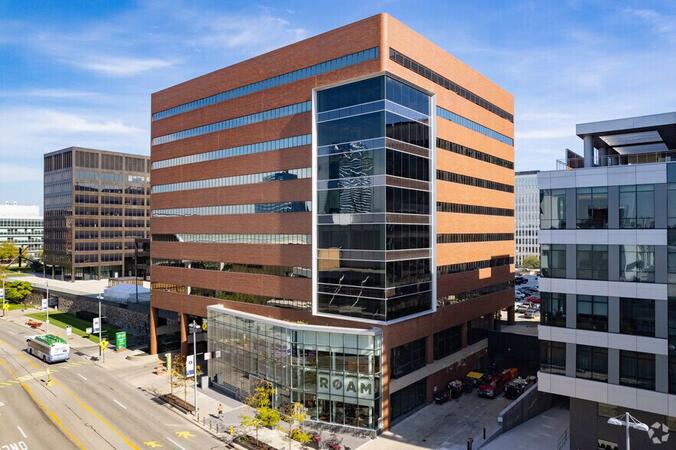
Detroit, MI - Renaissance Center
400 Renaissance Center, Detroit, United States, 48243
The GM Renaissance Center is conveniently located in downtown Detroit and easily accessed by car via Interstates 75 or 94, with secure underground parking available on site. Travelers flying into Detroit Metropolitan Airport (DTW) can expect a 25–30 minute trip by taxi or rideshare via I‑94. Public transit is efficient: the Detroit People Mover stops directly at the Renaissance Center station, and DDOT routes 3 and 9 serve nearby Jefferson Avenue. Pedestrian skywalks provide safe indoor access from downtown hotels, parking garages, and the riverwalk.
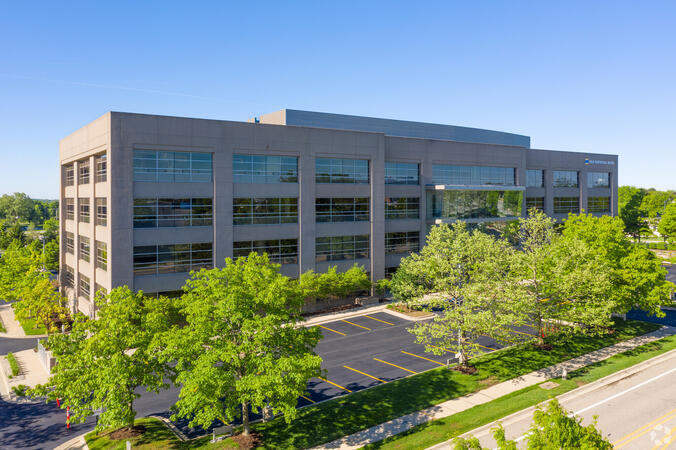
Ann Arbor, MI – Regus - South State Commons I
2723 S State St, Ann Arbor, United States, 48104
Regus South State Commons I is conveniently located off I‑94 via Exit 177 (State Street), with easy access to downtown Ann Arbor and surrounding suburbs. The building offers free on-site surface parking for guests. From Detroit Metropolitan Airport (DTW), the venue can be reached in approximately 20–25 minutes by taxi or rideshare via I‑94 West. Local public transit service (TheRide) operates Route 24 along South State Street, with a stop within a short 2-minute walk of the building.
Grand Rapids, MI - Regus – Calder Plaza
250 Monroe Ave NW, Grand Rapids, United States, 49503
The venue sits centrally at 250 Monroe Avenue NW in downtown Grand Rapids, easily accessed by car via US‑131 or I‑196—with connections via Monroe or Ottawa exits—and offers shared underground and surface parking. From Gerald R. Ford International Airport, take I‑96 East then I‑196 West into the city; the drive is about 20 minutes. Public transit through Rapid bus routes stops near Monroe or Ottawa Avenue, just a short walk from the Regus entrance; the downtown area is pedestrian-friendly.
Lansing, MI - Regus - One Michigan Avenue
120 North Washington Square, Lansing, United States, 48933
The venue is located in the heart of Lansing’s central business district at 120 North Washington Square, easily accessible by car via I‑496 or US‑127 with convenient street parking and a nearby parking ramp. From Capital Region International Airport (LAN), the location is approximately a 12‑minute drive west via I‑96 and US‑127, with taxis and rideshares readily available. Public transit users can take CATA bus routes that stop just a block away on Washington or Grand Avenue, offering seamless access to the venue.
This instructor-led, live training session in Michigan (delivered online or onsite) is tailored for entry-level professionals intending to explore the ethical complexities and legal frameworks associated with autonomous vehicles for government.
Upon completion of this training, participants will be equipped to:
Assess the ethical consequences of AI-based decision-making within autonomous vehicles.
Analyze international legal frameworks and policies that regulate self-driving technology.
Investigate liability and accountability issues arising from autonomous vehicle incidents.
Evaluate the equilibrium between technological innovation and public safety in regulatory regimes.
Review real-world case studies that highlight ethical dilemmas and legal conflicts.
This instructor-led, live training in Michigan (available online or onsite) is intended for entry-level professionals and stakeholders aiming to understand the foundational concepts, technologies, and applications of autonomous vehicles.
Upon completion of this training, participants will be able to:
Understand the essential components and operational principles of autonomous vehicles.
Examine the function of AI, sensors, and real-time data processing within self-driving systems.
Evaluate various levels of vehicle autonomy and their real-world utility.
Analyze the ethical, legal, and regulatory dimensions of autonomous mobility.
Obtain hands-on experience with autonomous vehicle simulations.
This instructor-led, live training in Michigan (delivered online or on-site) is tailored for intermediate-level network engineers and automotive IoT developers aiming to understand and implement V2X communication technologies for autonomous vehicles.
Upon completion of this training, participants will be able to:
Master the fundamental concepts of V2X communication.
Assess V2V, V2I, V2P, and V2N communication models.
Deploy V2X protocols such as DSRC and C-V2X.
Develop simulations for connected vehicle environments.
Address cybersecurity and privacy challenges in V2X networks.
This instructor-led, live training session in Michigan (delivered online or onsite) is designed for intermediate-level engineers, automotive sector specialists, and IoT professionals seeking to master the role of sensors in self-driving vehicles, with specific coverage of LiDAR, radar, camera systems, and fusion methodologies.
Upon completion of this program, participants will be equipped to:
Identify and distinguish between various sensor modalities deployed in autonomous vehicles.
Analyze sensor data streams to support real-time perception and decision-making processes.
Apply sensor fusion techniques to elevate vehicle accuracy and operational safety.
Refine sensor placement and calibration protocols to optimize autonomous driving performance.
This instructor-led, live training, offered in Michigan (either online or on-site), is tailored for advanced safety engineers and automotive professionals. The program supports the development of comprehensive safety strategies for autonomous vehicles, encompassing hazard analysis, functional safety assessments, and compliance with international standards relevant to government operations.
By the conclusion of this training, participants will be able to:
Identify and assess safety risks associated with autonomous driving systems.
Conduct hazard analysis and risk assessment using recognized industry standards.
Implement safety validation and verification methods for autonomous vehicle systems.
Apply functional safety standards, such as ISO 26262 and SOTIF, effectively.
Develop risk mitigation strategies to address safety challenges in autonomous vehicles.
This instructor-led, live training in Michigan (online or onsite) is tailored for advanced-level sensor fusion specialists and AI engineers seeking to develop robust multi-sensor fusion algorithms and optimize real-time navigation in autonomous systems for government use.
Upon completion of this training, participants will be able to:
Comprehend the fundamental principles and operational challenges of multi-sensor data fusion.
Implement sensor fusion algorithms designed for real-time autonomous navigation.
Integrate data from LiDAR, cameras, and RADAR to significantly enhance perception capabilities.
Analyze and evaluate fusion system performance under a variety of conditions.
Develop practical solutions for reducing sensor noise and aligning data streams.
This instructor-led, live training in Michigan focuses on the design and development of automotive software utilizing both AUTOSAR Classic and Adaptive platforms. Participants will acquire practical skills in configuring components, integrating ADAS software, and applying safety protocols using industry-standard tools suitable for government and public sector needs.
This instructor-led, live training in Michigan (online or onsite) is targeted at intermediate-level AI specialists and computer vision engineers seeking to develop robust perception systems for applications in autonomous driving.
Upon completion of this training, participants will be proficient in:
Grasping the core principles of computer vision as applied to autonomous vehicle operations.
Deploying algorithms for object identification, lane recognition, and semantic segmentation.
Integrating visual perception modules with other autonomous vehicle subsystems.
Applying deep learning methodologies for complex perception requirements.
Assessing the efficacy of computer vision models in operational field conditions.
This instructor-led, live training in Michigan (available online or onsite) is intended for intermediate-level automotive engineers and technicians seeking to develop hands-on expertise in the testing, simulation, and diagnosis of ECUs using Vector tools such as CANoe and CANape.
Upon completion of this training, participants will be prepared to:
Comprehend the operational role and functional capacity of ECUs within automotive systems.
Install and configure Vector software platforms, including CANoe and CANape.
Simulate and validate ECU communications across CAN and LIN network topologies.
Process diagnostic data and execute troubleshooting procedures for ECUs.
Develop test cases and implement automated testing workflows.
Calibrate and optimize ECU parameters through applied methodologies.
This instructor-led, live training in Michigan (online or onsite) is designed for advanced robotics engineers and AI researchers focused on deploying sophisticated path planning algorithms to enhance autonomous vehicle performance for government.
Upon completion, participants will be capable of:
Mastering the theoretical underpinnings of advanced path planning methodologies.
Implementing RRT*, A*, and D* algorithms for real-time navigation tasks.
Refining path planning for obstacle mitigation in high-volatility environments.
Fusing path planning algorithms with sensor data to improve operational accuracy.
Benchmarking algorithmic performance in practical, high-stakes scenarios.
This instructor-led, live training in Michigan (delivered online or on-site) targets intermediate-level automotive engineers and embedded systems developers aiming to acquire theoretical proficiency in ECUs, particularly regarding Vector-based tools and methodologies utilized in automotive engineering for government applications.
Upon completion, participants will be prepared to:
Interpret the architecture and operational functions of ECUs in contemporary vehicles.
Assess communication protocols integrated into ECU development.
Evaluate Vector-based tools and their theoretical implications.
Apply model-based development frameworks to ECU design.
This instructor-led, live training in Michigan (online or onsite) is directed at intermediate-level professionals aiming to develop a thorough comprehension of EV powertrain architectures, battery chemistry, battery management systems (BMS), and the determinants of energy efficiency in electric vehicles, with a specific focus on applications for government.
Upon completion of the training, participants will be able to:
Grasp the architectural structure and operational function of EV powertrains.
Perform analytical reviews of battery chemistries and their utility in electric vehicle systems.
Execute battery management strategies to improve performance standards and safety protocols.
Assess energy efficiency across distinct electric vehicle configurations for government use.
This instructor-led, live training in Michigan (online or onsite) is aimed at advanced-level data scientists, AI specialists, and automotive AI developers who wish to build, train, and optimize AI models for autonomous driving applications.
By the end of this training, participants will be able to:
Understand the fundamentals of AI and deep learning in the context of autonomous vehicles.
Implement computer vision techniques for real-time object detection and lane following.
Utilize reinforcement learning for decision-making in self-driving systems.
Integrate sensor fusion techniques for better perception and navigation.
Build deep learning models to predict and analyze driving scenarios.
This instructor-led, live training in Michigan (delivered online or on-site) is designed for entry-level quality engineers seeking to apply Quality Core Tools to ensure product integrity within the manufacturing industry.
Upon completion of this training, participants will be able to:
Comprehend the significance and integration of Quality Core Tools.
Master the principles and application of APQP processes to facilitate effective product quality planning.
Identify potential failures in products and processes, understand their impact on product integrity, and implement measures to mitigate risks.
Utilize statistical methods to monitor and control manufacturing processes, ensuring product integrity and process efficiency.
This instructor-led, live training in Michigan (online or onsite) is intended for entry-level quality assurance professionals who aim to acquire the fundamental knowledge of Statistical Process Control (SPC) and apply it in operational contexts.
Upon completion of this training, participants will be able to:
Grasp the basic tenets of Statistical Process Control (SPC).
Employ essential SPC tools, such as control charts, histograms, Pareto charts, and scatter diagrams, to monitor process outcomes.
Develop and interpret various control charts for variable and attribute data to detect and examine process fluctuations.
Determine and evaluate process capability indices.
This curriculum provides a comprehensive examination of Artificial Intelligence, with specific focus on Machine Learning and Deep Learning within the Automotive Industry. It establishes criteria for identifying appropriate technologies across various operational scenarios for government, ranging from basic automation and image recognition to complex autonomous decision-making frameworks.
The "Automotive SPICE (A-SPICE) - Introduction" workshop examines the Automotive SPICE process assessment model, analyzing its structural framework, classification system, and interpretative guidelines. Participants will develop the ability to interpret the evaluation process through the lens of project management and stakeholder governance. The curriculum addresses the market significance of ASPICE for government, compliance standards, process group definitions, and maturity levels, utilizing real-world implementation examples.
This instructor-led professional development program in Michigan (online or onsite) is designed for engineering personnel tasked with safeguarding connected vehicles for government and public sector use.
Upon completion, participants will be equipped to:
Integrate robust cybersecurity measures into automotive system architectures.
Select appropriate technologies, tools, and strategic approaches aligned with public sector requirements.
This instructor-led, live training in Michigan (available online or on-site) is intended primarily for engineers seeking to apply AUTOSAR for designing automotive components for government applications.
Upon completion of this training, participants will be able to:
Install and configure AUTOSAR.
Establish a standardized workflow.
Navigate the AUTOSAR environment with proficiency.
This instructor-led, live training (delivered online or onsite) is designed for intermediate-level embedded software engineers and automotive specialists responsible for developing, integrating, and verifying standardized software modules for Electronic Control Units (ECUs) using the AUTOSAR Classic Platform. This curriculum supports governance and accountability standards for government technology initiatives.
Upon completion, participants will be proficient in the following capabilities:
Deployment and configuration of AUTOSAR development environments, including DaVinci Developer, EB Tresos, or ETAS ISOLAR-A/B.
Analysis of the AUTOSAR hierarchical architecture and Basic Software (BSW) module structures.
Architectural design and implementation of the AUTOSAR Operating System and communication stack (COM stack).
Utilization of CANoe or comparable instrumentation for simulation, testing, and diagnostic verification within an AUTOSAR framework.
This instructor-led, live training (available online or onsite) targets intermediate-level embedded software developers and automotive engineers. It provides the necessary expertise to configure AUTOSAR OS (OSEK/VDX based) and the COM Stack, ensuring robust task scheduling and communication in automotive ECUs in alignment with government efficiency and accountability goals.
By the end of this training, participants will be able to:
Understand the AUTOSAR OS architecture and scheduling policies
Implement and manage tasks, events, alarms, and counters
Describe and configure the COM Stack layers, including PDUR and communication services
Explain protocol stacks (CAN, LIN, FlexRay, Ethernet) and how AUTOSAR interfaces with them
Configure OS and COM modules using industry tools (Vector DaVinci or ETAS ISOLAR)
Simulate and validate task and communication flow in an AUTOSAR-based ECU
This comprehensive training module is structured to equip personnel with the requisite expertise in control plans for effective process governance and quality assurance. The curriculum focuses on the systematic development and deployment of control frameworks to minimize operational risks, oversee critical parameters, and ensure consistent output standards. By utilizing real-world scenarios, illustrative case studies, and interactive practical exercises, learners will acquire the competencies needed to establish robust control mechanisms that align with specific organizational mandates and industry requirements for government operations.
This training program is designed to equip personnel with a thorough grasp of customer specific requirements (CSR) and their operational significance. Learners will examine the pivotal role of CSR in ensuring client satisfaction, mastering techniques for identifying and governing these requirements, and developing strategies to fulfill client expectations. The curriculum further addresses the influence of CSR on quality management systems and delineates the necessary procedures for effective implementation for government.
This course provides a detailed understanding of Design Failure Mode and Effects Analysis (DFMEA) and its role in product design and development. Participants will acquire the skills to systematically identify and mitigate potential design failures, thereby improving product reliability and customer satisfaction. The course encompasses the DFMEA process, risk assessment methodologies, and best practices for implementing preventive and corrective measures.
This in-depth course is structured to provide participants with the necessary expertise and capabilities to conduct effective field failure analysis within diverse sectors. Analyzing failures in the field is essential for identifying and resolving product deficiencies, ensuring stakeholder confidence, and promoting ongoing operational improvement. Through this training, participants will master the fundamental principles, technical methods, and industry best practices of field failure analysis, empowering them to investigate, diagnose, and mitigate product failures in operational environments for government purposes.
This training program offers a comprehensive examination of the FMEA methodology and its practical application within manufacturing and service sectors. FMEA serves as a systematic technique for detecting, evaluating, and reducing the likelihood of system, product, or process malfunctions. Learners will acquire the skills necessary to identify and assess potential failure modes, their consequences, and underlying causes, while formulating effective control measures to prevent or lessen the adverse impacts of such failures for government stakeholders.
ISO 26262 establishes the mandatory requirements for functional safety within the automotive industry.
This instructor-led training program, available in live online or onsite formats, is designed for automotive professionals seeking to implement the ISO 26262 standard within their respective organizations.
Upon completion of this training, participants will be equipped to:
Comprehend functional safety as it pertains to automotive hardware and software development.
Recognize the legal liabilities and compliance obligations associated with ISO 26262.
Execute the safety processes mandated by ISO 26262.
Course Delivery Methodology
Interactive lectures and facilitated discussions.
Extensive exercises and practical applications.
Hands-on implementation within a live laboratory environment.
Course Customization Options
To request a tailored training program for this course, please contact the designated office to arrange specifics.
This comprehensive curriculum is structured to provide participants with the necessary knowledge and proficiency to execute field failure analysis effectively within various public and private sectors. Field failure analysis is essential for identifying and resolving product deficiencies, ensuring operational reliability, and promoting ongoing improvement. Through this program, participants will acquire the foundational principles, technical methods, and best practices of field failure analysis, empowering them to investigate, diagnose, and mitigate product failures in real-world operational contexts.
This MSA course aims to equip participants with a complete understanding of the techniques for assessing and improving measurement systems employed in production and quality control settings. Learners will master the evaluation of system accuracy, precision, and stability, the identification of variation sources, and the implementation of corrective strategies. Through applied examples, case studies, and interactive components, participants will build the skills necessary to perform effective MSA studies and ensure the reliability and accuracy of their measurement systems for government operations.
This training program is designed to develop proficient problem-solving capabilities for government agencies and public sector entities. By integrating theoretical frameworks with practical applications, participants will master methodologies such as the 8D Method, 5 Whys, and Ishikawa (Fishbone) Diagram to identify root causes, implement effective solutions, and prevent issue recurrence. The program prioritizes a systematic, data-driven approach to enhance operational efficiency, accountability, and continuous improvement within organizational processes.
This instructional program is structured to equip federal and public sector professionals with a comprehensive mastery of root cause analysis and the implementation of corrective measures. Participants will acquire the skills to differentiate between the underlying cause of an operational failure and the cause of the oversight that allowed it to occur. They will also learn to utilize various analytical tools and distinguish between immediate fixes and long-term preventive actions. The curriculum further covers methodologies for validating the effectiveness of implemented controls and introduces the structured 8D problem-resolution process.
Benefits:
Cultivate the capacity to identify and remediate fundamental drivers of operational issues effectively.
Achieve proficiency in employing critical analytical instruments and techniques for government applications.
Implement and verify corrective actions to mitigate the risk of recurring deficiencies.
Enhance the reliability and quality of processes within the public sector.
Promote a governance culture focused on continuous improvement and proactive issue resolution.
This curriculum provides a comprehensive examination of reverse FMEA (Failure Mode and Effects Analysis). Participants will acquire the skills necessary to utilize this methodology to assess the efficacy and vulnerabilities of products or processes for government contexts and pinpoint potential failure modes. The instruction covers the sequential phases of the reverse FMEA procedure, ranging from the identification of potential failure modes to the evaluation of the magnitude of their impact and the formulation of corrective action plans to prevent or minimize these risks.
Read more...
Last Updated:
Testimonials (4)
The attention to cover all doubts
Victor Rubio - GDL Circuits
Course - ISO 26262 Automotive Functional Safety
The trainer's patience & responsiveness to my questions during the training. I also appreciated the trainer's preparedness for the training.
Dana - Corrigan Oil Company
Course - ISO 9001 for Quality Management
The practice
Ignat
Course - Root Cause Analysis
Good expertise of the trainer
Christoph Perret - RENAULT TECHNOLOGIE ROUMANIE S.R.L.
Online Automotive training in Michigan, Automotive training courses in Michigan, Weekend Automotive courses in Michigan, Evening Automotive training in Michigan, Automotive instructor-led in Michigan, Evening Automotive courses in Michigan, Automotive private courses in Michigan, Automotive one on one training in Michigan, Automotive classes in Michigan, Automotive coaching in Michigan, Weekend Automotive training in Michigan, Automotive instructor-led in Michigan, Automotive instructor in Michigan, Online Automotive training in Michigan, Automotive trainer in Michigan, Automotive boot camp in Michigan, Automotive on-site in Michigan