NobleProg delivers specialized DevOps training courses in Georgia, catering to professionals across the US Florida sales area. These sessions are designed to enhance technical expertise and leadership skills tailored to the local industry demands. By leveraging our extensive network, participants gain access to high-quality instruction and practical learning experiences within the region.
Whether delivered remotely or at a facility, instructor-led DevOps courses provide practical instruction on selecting, implementing, and managing the tools and processes necessary to optimize software development efforts for government agencies.
Training options include "online live training" and "onsite live training." Online sessions utilize an interactive remote desktop environment. Onsite sessions may be conducted locally at the customer's facility in Georgia or at NobleProg corporate training centers in Georgia.
NobleProg -- Your Local Training Provider for government organizations
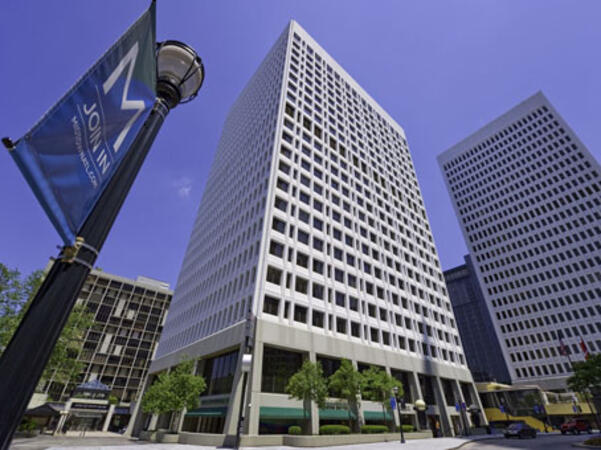
Atlanta, GA – Regus at Colony Squar
1201 Peachtree Street NE, Suite 200, Atlanta, United States, 30361
The venue is centrally located in Midtown Atlanta within the prominent Colony Square complex at 1201 Peachtree Street NE, easily accessed by car via I‑75/85 or GA‑400, with several parking garages nearby. From Hartsfield–Jackson Atlanta International Airport (ATL), around 15 miles south, a taxi or rideshare typically takes 20–30 minutes north along I‑75/85 N. Public transit users can take MARTA Rail to the Arts Center or Midtown stations (0.3–0.5 miles away) and walk easily, and numerous MARTA bus routes along Peachtree Street stop directly outside the entrance.
Atlanta, GA – The Proscenium
1170 Peachtree Street NE, Atlanta, United States, 30309
The venue is located in the heart of Midtown Atlanta in the Proscenium high–rise at 1170 Peachtree Street NE, easily accessible by car via I‑75/85 and GA‑400 with several parking garages nearby. Visitors arriving from Hartsfield–Jackson Atlanta International Airport (ATL), about 15 miles south, can expect a taxi or rideshare ride taking 20–30 minutes via I‑75/85 North. Public transit is seamless with MARTA Rail service; the Arts Center and Midtown stations are within walking distance (approximately 0.3–0.4 miles), and multiple MARTA bus routes also serve Peachtree Street.
Decatur, GA – Regus at One West Court Square
One West Court Square, Suite 750, Decatur, United States, 30030
The venue is located in the heart of downtown Decatur within One West Court Square, easily reached by car via I‑20 and I‑285, with several public parking decks directly adjacent. Travelers from Hartsfield–Jackson Atlanta International Airport (ATL), approximately 17 miles southwest, can expect a taxi or rideshare ride of around 25–30 minutes via I‑20 East. Public transit is particularly convenient: MARTA rail users can disembark at Decatur Station (about 0.15 miles away) and walk a few minutes to the building entrance. Local bus routes also serve Trinity Place and Swanton Way, putting the center within easy reach.
Atlanta, GA – Regus at One Hartsfield
100 Hartsfield Centre Parkway, Suite 500, Atlanta, United States, 30354
The venue is located in the One Hartsfield Center office building, adjacent to Hartsfield–Jackson Atlanta International Airport, easily reached by car via I‑75/I‑85 or GA‑138, with abundant on-site parking. Visitors arriving from ATL airport can walk or take a shuttle to the building, or opt for a quick 2–3‑minute taxi or rideshare ride. Public transit users can board MARTA from the Airport Station and ride one stop to College Park Station, then catch a connecting shuttle or enjoy a brief walk of about half a mile.
Atlanta, GA – Regus at Peachtree
260 Peachtree Street NW, Suite 2200, Atlanta, United States, 30303
The venue is situated in the iconic Coastal States Building at 260 Peachtree Street in downtown Atlanta, accessible by car via I‑75/85 or I‑20 with convenient parking garages nearby. From Hartsfield–Jackson Atlanta International Airport (ATL), about 12 miles south, a taxi or rideshare along I‑75/85 North takes approximately 15–20 minutes. For public transit, MARTA rail users can disembark at Five Points Station and walk 0.5 miles northeast, or exit at Peachtree Center Station and walk two blocks north—both routes offering easy access.
Augusta, GA – At Broad Street
823 Broad Street, Augusta, United States, 3090
The venue is located in the heart of downtown Augusta on Broad Street, easily accessible by car via I‑20 with several public parking garages nearby. From Augusta Regional Airport (AGS), about 9 miles west, taxis or rideshares typically take 15–20 minutes via I‑20. Public transit is available through Augusta Public Transit buses with routes along Broad Street, stopping within a few blocks of the venue, offering a convenient option for attendees without a car.
Savannah, GA – Regus at Bull Street
100 Bull St Downtown, Suite 200, Savannah, United States, 31401
The venue is located in the historic downtown area on Bull Street in the Altmayer Building, easily accessible by car via I‑16 and U.S. 17, with several public garages nearby. From Savannah/Hilton Head International Airport (SAV), about 12 miles west, taxis or rideshares typically take 15–20 minutes via U.S. 17 South. Public transit is available via Chatham Area Transit (CAT) buses, with frequent service along Bull and Broughton Streets; Johnson Square Station is just a couple minutes’ walk from the venue.
This instructor-led, live training session in Georgia (available online or onsite) is designed for intermediate-level remote teams, project managers, and HR professionals who seek to automate collaboration and task management processes using Make.
Upon completion of this training, participants will be able to:
Automate team collaboration tasks and administrative notifications.
Integrate Make with various project management systems.
Streamline HR and onboarding workflows.
Enhance task tracking and reporting capabilities through automation.
This instructor-led live training, conducted in Georgia (either online or onsite), is tailored for advanced-level AI/ML engineers, data scientists, and technical innovators. It focuses on integrating AI capabilities into Make workflows to optimize and automate processes for government.
By the conclusion of this training, participants will demonstrate the ability to:
Evaluate the role of AI and machine learning in operational automation.
Integrate AI/ML models into Make workflows utilizing API standards.
Execute sentiment analysis, predictive modeling, and data-informed decision-making.
This instructor-led, live training in Georgia (available online or on-site) is designed for advanced-level developers, system integrators, and technical operations teams seeking to enhance automation processes through the integration of external APIs within Make.
Upon completion of this training, participants will be able to:
Analyze Make’s API architecture and methods for extending its functionality.
Utilize APIs to facilitate the integration of third-party applications.
Develop custom connectors for applications that are not natively supported.
Apply advanced automation techniques leveraging Make and APIs.
This instructor-led, live training conducted in Georgia (online or onsite) is targeted at intermediate-level software developers, system administrators, and IT project managers aiming to enhance their proficiency in building and managing automated, scalable, and collaborative IT environments for government operations.
Upon completion, participants will be able to:
Apply the core principles and benefits of DevOps and Platform Engineering.
Implement Infrastructure as Code (IaC) to automate IT infrastructure provisioning.
Build and maintain Continuous Integration and Continuous Delivery (CI/CD) pipelines.
Deploy and manage microservices using containerization tools like Docker and Kubernetes.
Integrate security practices into the software development lifecycle with DevSecOps.
Apply observability techniques to monitor and improve system reliability.
This instructor-led, live training in Georgia (delivered online or onsite) is intended for advanced-level developers and technical consultants seeking to create tailored automation solutions and expand n8n’s functionality to address specific organizational needs.
Upon completion of this training, participants will be able to:
Establish a development environment for constructing custom nodes within n8n.
Develop custom nodes to address specific business operational needs.
Test and troubleshoot custom nodes within a controlled environment.
Deploy and maintain custom nodes for production use.
This instructor-led live training in Georgia (delivered online or onsite) is tailored for senior DevOps professionals aiming to automate CI/CD pipelines, infrastructure monitoring, and cloud deployments using Make.
Upon completion of this training, participants will be prepared to:
Automate CI/CD workflows using Make, establishing integrations with Jenkins, GitHub, and Docker.
Oversee infrastructure automation for the provisioning and continuous monitoring of cloud resources.
Execute efficient workflow automation for code deployment, testing cycles, and rollback protocols.
Enhance infrastructure orchestration by leveraging Make’s advanced integration capabilities.
This instructor-led, live training in Georgia (online or onsite) is intended for advanced-level developers and data engineers seeking to master sophisticated workflow automation techniques using n8n.
By the conclusion of this training, participants will be able to:
Create and implement advanced workflows with conditional logic and branching.
Integrate with complex APIs and third-party systems.
Develop and deploy custom nodes to expand n8n’s functionality.
Optimize workflows for scalability and efficiency in data-heavy environments.
This instructor-led, live training session in Georgia (delivered online or on-site) is designed for advanced-level professionals seeking to implement fine-tuned models with reliability and efficiency.
By the conclusion of this training, participants will possess the capability to:
Comprehend the operational challenges associated with the deployment of fine-tuned models.
Employ containerization and deployment tools, such as Docker and Kubernetes, to manage model workflows.
Integrate monitoring and logging systems for operational models.
Optimize model performance to achieve low latency and scalability in practical scenarios.
This instructor-led, live training in Georgia (delivered online or onsite) is tailored for intermediate-level professionals seeking to utilize Make for the integration of business applications, the optimization of operational workflows, and the enhancement of organizational productivity.
Upon completion of this training, participants will be prepared to:
Establish automated workflows connecting distinct business applications.
Utilize Make to integrate SaaS tools, including Google Workspace, Slack, Trello, and Stripe.
Architect and deploy multi-step workflows without the need for programming code.
Refine and resolve issues within automated workflow systems.
This live, instructor-led training program in Georgia (available online or in person) is specifically designed for senior business practitioners and automation specialists seeking to utilize Zapier and AI integrations to expand operational capacity for government and public sector use.
Upon completion of this program, participants will demonstrate the ability to:
Construct and deploy intricate automation sequences utilizing Zapier.
Embed AI models into core business processes to generate predictive intelligence.
Enhance operational efficiency by automating cross-platform tasks.
Oversee and diagnose automated workflows to ensure continuous optimization.
This instructor-led, live training in Georgia (delivered online or onsite) targets advanced-level professionals aiming to deploy Apache Airflow in cloud environments, establish CI/CD pipelines, and implement rigorous monitoring and logging practices.
Upon completion, participants will be prepared to:
Deploy Apache Airflow across cloud and containerized infrastructure.
Configure CI/CD pipelines to automate DAG testing and deployment.
Integrate monitoring and logging tools to enhance system reliability.
Optimize Airflow configurations for performance and scalability.
Apply security best practices for managing workflows and environments.
This instructor-led, live training in Georgia (available online or on-site) is designed for advanced-level DevOps teams and IT architects seeking to deploy Kubiya AI for the automation and optimization of enterprise-level DevOps operations.
Upon completion of this training, participants will be able to:
Configure Kubiya AI for specific enterprise DevOps environments.
Integrate Kubiya AI with CI/CD tools employed in enterprise DevOps settings.
Augment DevOps automation through the implementation of AI-driven workflows.
Guarantee security and regulatory compliance within AI-driven DevOps processes.
This instructor-led, live training session in Georgia (available online or in-person) is targeted at intermediate-level data professionals who intend to employ the Make platform to construct automated data pipelines and enhance data synchronization procedures.
Upon completion of this training, participants will be able to:
Establish automated data pipelines using the Make platform.
Connect various data sources, including databases, CRM systems, and cloud applications.
Implement real-time data synchronization and transformation workflows.
Optimize and troubleshoot automation workflow performance.
This guided instructional module, delivered via remote or in-person formats, targets mid-level e-commerce specialists seeking to streamline order fulfillment, payment processing, and client support functions for government operations through the utilization of Zapier.
Upon completion of this training, participants will possess the competency to:
Execute automated protocols for order management and fulfillment.
Align transactional data with established accounting systems.
Elevate client support standards through the application of automated workflows.
Refine marketing and sales operational procedures.
This instructor-led, live training in Georgia (online or onsite) is designed for intermediate-level professionals who require the ability to automate and manage machine learning workflows, including model training, validation, and deployment, using Apache Airflow.
Upon completion of this training, participants will be prepared to:
Configure Apache Airflow for machine learning workflow orchestration.
Automate data preprocessing, model training, and validation tasks.
Integrate Airflow with machine learning frameworks and tools.
Deploy machine learning models using automated pipelines.
Monitor and optimize machine learning workflows in production environments.
This instructor-led, live training session in Georgia (available online or on-site) is tailored for intermediate-level DevOps professionals aiming to embed security into DevOps practices. The focus is on automating security checks and processes within CI/CD pipelines for government contexts.
Upon completion, participants will be able to:
Comprehend the fundamentals of integrating security within the DevOps process.
Automate security verification using Jenkins and integrate tools such as SonarQube for code analysis and vulnerability detection.
This instructor-led, live training in Georgia (online or onsite) is designed for intermediate-level eCommerce professionals seeking to optimize sales and inventory management processes using Make.
Upon completion of this training, participants will be equipped to:
Integrate eCommerce platforms, including Shopify, WooCommerce, and Etsy, with Make.
Automate inventory adjustments and order tracking across multiple systems.
Establish automated workflows for customer communication and support operations.
Enhance sales and inventory management through advanced automation strategies.
This instructor-led live training in Georgia (delivered online or in-person) targets intermediate-level marketing professionals aiming to automate lead generation, email campaign management, and customer engagement processes using Zapier.
Upon completion of this training, participants will demonstrate the ability to:
Comprehend the function of Zapier within marketing automation frameworks.
Design and implement workflows to facilitate automated lead acquisition and cultivation.
Execute integrations between marketing assets, including CRMs, email systems, and analytics platforms.
Refine and resolve issues in automation workflows to ensure peak operational efficiency.
This live, instructor-led training program, offered in Georgia (online or onsite), is targeted at advanced-level professionals seeking to develop custom operators, sensors, and plugins within Apache Airflow. The curriculum focuses on integrating these components with established data infrastructure to achieve superior automation and monitoring capabilities for government operations.
Upon completion of this training, participants will be equipped to:
Engineer custom operators, hooks, and sensors aligned with specific workflow requirements.
Architect and deploy Airflow plugins to extend system functionality.
Facilitate seamless integration between Airflow workflows and external systems or services.
Enhance workflow optimization and oversight through advanced diagnostic tools.
Apply best practices for the administration of large-scale Airflow deployments.
This instructor-led, live training in Georgia (online or onsite) is designed for advanced developers, automation specialists, and IT professionals seeking to master custom integrations and multi-step automations in Zapier.
Upon completion of this training, participants will demonstrate the ability to:
Construct custom Zapier integrations utilizing APIs and webhooks.
Architect and oversee complex multi-step workflows.
Refine and troubleshoot advanced automation workflows.
Integrate Zapier with proprietary or specialized applications.
This instructor-led, live training in Georgia (online or onsite) is designed for developers and IT professionals across all skill levels who intend to automate tasks and processes using AI, minimizing the need for extensive coding.
Upon completion of this training, participants will be able to:
Design and implement complex workflows utilizing the n8n visual programming interface.
Integrate AI capabilities into workflow structures using LangChain.
Construct custom chatbots and virtual assistants for a variety of operational use cases.
Execute advanced data analysis and processing tasks using AI agents.
This facilitated, live instructional session (delivered online or in-person) in Georgia is targeted at intermediate-level DevOps engineers and CI/CD supervisors seeking to augment their pipeline capabilities with AI automation via Kubiya AI for government applications.
Upon completion of this training, participants will demonstrate the ability to:
Comprehend the foundational elements of embedding AI within DevOps pipelines.
Deploy Kubiya AI within recognized CI/CD platforms, including Jenkins and GitLab CI.
This instructor-led live training, conducted either online or in person at Georgia, is intended for intermediate-level marketing professionals aiming to automate routine tasks, enhance lead cultivation, and optimize stakeholder engagement through workflow automation.
Upon completion of this training, participants will be able to:
Utilize Make to automate marketing campaigns and lead cultivation workflows.
Develop personalized constituent engagement maps through integrated platforms.
Synchronize data across marketing tools such as Mailchimp, HubSpot, and social media platforms.
Monitor and analyze automated workflows to optimize campaign performance.
Adopt best practices for scalable marketing automation strategies.
This instructor-led, live training in Georgia (online or onsite) is designed for advanced-level DevOps engineers and automation specialists seeking to deepen their mastery of Kubiya AI and utilize its full capabilities for large-scale operations for government purposes.
Upon completion of this training, participants will be equipped to:
Automate complex workflows utilizing Kubiya AI.
Customize AI responses and operational actions.
Scale DevOps operations with Kubiya AI.
Troubleshoot and optimize Kubiya AI implementations.
Understand and implement security and compliance measures.
Integrate Kubiya AI with advanced CI/CD tools and additional cloud services.
Set up performance monitoring and create custom reports.
This instructor-led, live training session in Georgia (conducted online or on-site) is intended for intermediate-to-advanced level developers and technology professionals seeking to engineer sophisticated AI workflows in n8n for government applications.
Upon completion of this training program, participants will be equipped to:
Comprehend the integration of AI services with n8n workflow architectures.
Deploy AI-driven decision logic within automated administrative processes.
Construct custom AI nodes and utilize pre-configured AI components in n8n.
Evaluate and enhance the operational performance of AI workflows.
This instructor-led training, conducted in Georgia (either remotely or on-site), targets intermediate-level professionals seeking to design and optimize automated workflows using Zapier for business operations.
Upon completion of the program, participants will possess the capability to:
Develop and deploy efficient Zapier-driven workflow architectures.
Integrate various business applications to achieve seamless operational automation.
Enhance automation performance and resolve recurring technical challenges.
Scale automated processes to align with evolving organizational requirements.
This instructor-led live training, conducted in Georgia (online or onsite), is targeted at intermediate-level personnel aiming to optimize workflow performance, manage complex dependencies, and scale Apache Airflow deployments for large datasets and enterprise operations for government.
Upon completion of this training, participants will be able to:
Optimize Apache Airflow workflows to ensure improved performance and system reliability.
Manage and troubleshoot intricate workflow dependency structures.
Utilize advanced Airflow capabilities, including the creation of custom operators and sensors.
Scale Apache Airflow infrastructure to accommodate large-scale datasets and distributed system architectures.
Apply best practices for monitoring, logging, and security within Airflow environments.
This instructor-led, live training in Georgia (online or onsite) is intended for intermediate-level IT professionals and automation engineers seeking to master advanced Make features, refine complex workflows, and manage error resolution effectively.
Upon completion of this training, participants will be able to:
Apply advanced Make features for workflow automation for government operations.
Enhance workflows using conditional logic, iterators, and error handling mechanisms.
Integrate multiple applications for cohesive automation.
Monitor and diagnose workflows to ensure maximum efficiency.
Adopt best practices for scaling workflow automation solutions.
This live, instructor-led training in Georgia addresses Apache Airflow 2.x for the purpose of constructing, automating, and scaling data pipelines. Participants will gain the skills to author DAGs, integrate cloud services, and deploy observability, security, and Kubernetes-based scaling to ensure robust production environments for government.
This instructor-led, live training, conducted in Georgia (online or onsite), is designed for entry-level DevOps professionals and IT managers aiming to evaluate the capabilities of Kubiya AI and integrate it with current tools for government.
Upon completion, participants will be able to:
Analyze the functional attributes and operational benefits of Kubiya AI.
Deploy and configure Kubiya AI within designated environments.
Execute fundamental use cases for Kubiya AI within DevOps operations.
Establish integrations between Kubiya AI and pre-existing DevOps tools.
This live, instructor-facilitated training in Georgia (delivered online or on-site) is intended for entry-level participants seeking to acquire foundational knowledge of workflow automation and streamline daily operational tasks using Make for government purposes.
Upon completion of this training, participants will be competent to:
Develop and administer workflows within Make.
Integrate disparate applications into automated workflows.
Automate fundamental processes, including data synchronization, notification management, and file administration.
Apply pre-existing templates and construct custom workflows as needed.
Execute troubleshooting and debugging procedures for workflows.
This instructor-led, live training session (available online or onsite) targets entry-level business professionals and IT specialists seeking to master the foundational elements of n8n and apply its latest features to achieve intelligent automation for government operations.
The SRE Practitioner Certification Preparation program is a comprehensive training initiative that addresses advanced Site Reliability Engineering practices aligned with the official DevOps Institute curriculum, preparing participants for successful certification attainment.
This instructor-led, live training (available online or onsite) is designed for experienced DevOps and SRE professionals who seek to master advanced SRE practices and prepare for the DevOps Institute SRE Practitioner certification exam.
Upon completion of this training, participants will be able to:
Identify and rectify common SRE anti-patterns.
Define and manage SLIs, SLOs, and error budgets effectively.
Design secure, fault-tolerant, and highly reliable systems.
Implement advanced observability, automation, and incident response strategies.
Course Format
Interactive lectures and structured discussions.
Extensive exercises and practical application.
Hands-on implementation in a live-lab environment.
Customization Options
To request a customized training program tailored for government agencies, please contact us to arrange details.
This live, instructor-guided training, delivered either online or on-site in Georgia, is intended for novice professionals aiming to leverage Zapier for the automation of repetitive duties and the improvement of process efficiency, eliminating the need for coding skills.
By the conclusion of this instruction, attendees will be equipped to:
Grasp the essential functions of Zapier and its automation features.
Establish and adjust automated workflows to handle recurring tasks.
Connect standard business applications with the Zapier system.
Oversee and refine the operation of automated processes.
This instructor-led, live training in Georgia (online or onsite) targets engineering and design professors who seek to understand, apply, and instruct modern software development practices relevant to systems engineering, civil engineering, design, and architecture disciplines, with a focus on applicability for government and public sector educational programs.
AIOps is a rapidly advancing domain that addresses the requirements of modern, complex IT environments—specifically those functioning within cloud-based architectures. The AIOps Foundation course provides a thorough introduction to the concepts, technologies, and best practices associated with leveraging artificial intelligence in IT operations for government.
This program examines the background of AIOps, its underlying principles, applicable tools, and the organizational challenges encountered by IT teams implementing these methodologies.
The training is concluded with an examination. Successful completion results in the globally recognized AIOps Foundation certification, which remains valid for a period of three years.
Intended Audience
This course is tailored for professionals and managers engaged in the following areas:
This instructor-led, live training in Georgia (available online or onsite) is designed for DevOps engineers, developers, and systems operations (SysOps) administrators seeking to maximize the utilization of tools and features available through the Ansible project to enhance organizational IT infrastructures and processes.
Participants will also have the opportunity to execute complex Ansible implementations for large-scale applications while utilizing its open-source tower capabilities to improve DevOps management and collaborative functions for government and other institutional environments.
Upon completion of this training, participants will be capable of:
Installing and configuring Ansible in conjunction with other open-source tools and resources.
Establishing a centralized system for DevOps management utilizing Ansible project features.
Operating automation tools and advanced resources within Ansible to achieve CI/CD objectives.
Implementing effective SysOps methods using Ansible's collaborative features to manage larger teams.
Enhancing the execution of DevOps tasks within the organization and optimizing existing workflows.
Integrating Ansible with external platforms and leveraging additional Ansible tools to support the organization's strategic goals.
This seven-day program offers a comprehensive, hands-on approach to the design, deployment, and operation of cloud-native applications, incorporating modern DevOps best practices suitable for government use.
Participants will examine methods for designing scalable microservices architectures, optimizing container environments, and managing production workloads within Kubernetes. The curriculum covers advanced deployment strategies, GitOps-driven automation, and observability frameworks essential for ensuring system reliability and performance.
Emphasis is placed on addressing real-world operational challenges, including incident response, failure simulation, and root cause analysis. The program concludes with the integration of AI-powered tools to support troubleshooting and accelerate operational decision-making processes.
Upon completion of the training, participants will possess a clear understanding of how to build, deploy, monitor, and maintain resilient distributed systems within a Kubernetes-based infrastructure.
Gain insight into the definition of DevOps Engineering, its strategic importance, and the methodologies employed to engineer successful implementations.
The course begins with a brief review of foundational DevOps principles before transitioning to implementation strategies. Designed from an engineering perspective, the curriculum covers topics including the relationship between DevOps and other frameworks, relevant technologies, application design practices, continuous integration methods, continuous delivery and deployment, continuous testing, elastic infrastructure, monitoring, metrics, observability, governance, human factors, and emerging trends in DevOps engineering.
The DevOps Foundation course establishes a foundational understanding of core DevOps terminology, ensuring uniform communication across stakeholders while articulating the strategic advantages of DevOps for institutional efficacy and service delivery.
This course focuses on the human dynamics of cultural transformation, providing participants with the necessary practices, methods, and tools to engage personnel across the DevOps spectrum. The instruction utilizes real-life scenarios and case studies to illustrate these concepts. Upon completion, participants will have actionable insights, such as an understanding of Value Stream Mapping, to apply in their professional roles.
In this instructor-led, live course located in Georgia, participants will learn how to formulate the proper security strategy to face the DevOps security challenge for government entities.
This course delivers a thorough examination of the Software Development Life Cycle (SDLC) and its secure implementation through automation, integration, and security best practices. Participants will develop hands-on skills in applying DevOps and DevSecOps methodologies to strengthen software security while maintaining efficiency. The curriculum also covers critical OWASP tools for threat modeling, SBOM integration, vulnerability tracking, and security testing in CI/CD pipelines for government.
The DevSecOps Practitioner course introduces a range of practices for advancing to a more comprehensive understanding of DevSecOps. This module explores practical outcomes through finding the optimal balance of personnel, building processes to accelerate value, and comparing available technological options. It is tailored for recently transformed organizations seeking to enhance DevSecOps skills and awareness for government operations.
This comprehensive, advanced, and practical workshop addresses the critical security challenges inherent in modern Continuous Integration/Continuous Deployment pipelines. Tailored for security professionals, DevOps engineers, and developers focused on robust pipeline defense, the training combines live attack simulations with industry-standard tools and actionable defense measures for government operations.
This instructor-led, live training in Georgia (online or onsite) is targeted at DevOps engineers and infrastructure architects who aim to automate the provisioning, monitoring, and lifecycle management of private AI clusters built on EXO for government applications.
This instructor-led, live training in Georgia (online or onsite) is tailored for engineers who aim to assess contemporary approaches and tools to make strategic decisions on the adoption pathway for MLOps within their organization.
Upon completion of this training, participants will be capable of:
Installing and configuring various MLOps frameworks and tools.
Constructing teams with the requisite skills for building and sustaining an MLOps system.
Preparing, validating, and versioning data for ML model utilization.
Comprehending the components of an ML Pipeline and the instruments required for its development.
Testing various machine learning frameworks and server infrastructure for production-grade deployment.
Operationalizing the Machine Learning process to ensure reproducibility and maintainability for government use.
This instructor-led, live training in Georgia (online or onsite) is directed at DevOps engineers, SREs, and platform teams who wish to substitute manual orchestration and brittle glue scripts with automated, node-driven n8n workflows for CI/CD pipelines, infrastructure management, and incident response.
This instructor-led, live training in Georgia is designed for intermediate-level professionals seeking to automate business processes and build their first AI agent with Make.
By the end of this training, participants will be able to:
Design no-code workflows in Make utilizing triggers and webhooks.
Connect AI agents to institutional data for government operations within a flow.
Automate a substantive process end-to-end, incorporating error handling and monitoring.
This management-oriented DevOps course delivers a comprehensive examination of modern software delivery methodologies, integrating DevOps culture, operational processes, tooling, and strategic business objectives. Through a combination of briefings, demonstrations, hands-on laboratory exercises, and workshops, participants will analyze the full DevOps lifecycle. This scope ranges from version control and CI/CD pipelines to containerization, infrastructure automation, security integration, and reliability engineering.
The curriculum extends beyond technical specifications to emphasize the managerial dimensions of DevOps adoption, including organizational transformation, maturity assessment, performance metrication, and value creation for the public sector. Participants will engage with realistic scenarios and their own active projects to identify areas for enhancement, evaluate current delivery practices, and formulate practical action plans for the integration of DevOps within their respective agencies or organizations.
This capstone course instructs participants on the design, deployment, and operation of a comprehensive sovereign digital infrastructure stack from the ground up. Upon completion, students will have constructed a functional mini-organization utilizing exclusively self-hosted, open-source tools for identity, communication, productivity, development, security, AI, and monitoring, eliminating reliance on major cloud providers such as Google, Microsoft, AWS, or proprietary SaaS platforms.
Read more...
Last Updated:
Testimonials (6)
Considerations about privacy and policy
Angelo Stefano Soglia - Parkino srl
Course - Claude AI for Workflow Automation and Productivity
understand basic concept, being more realistic , clarify our needs
ARDENTI Eric - NATO
Course - AI-Powered Automation: From No-Code Workflows to Autonomous Agents
the overall concept of DevOps/DevSecOps is not a team but a culture, a mind set
Mpho Mashele - South Africa Reserve Bank
Course - DevOps and Platform Engineering: A Collaborative Approach
CI/CD Best Practices (gitflow and gitops), Application strategies, idempotency and drift, remote state management, Pod Disruption Budgets and Best Practices
McKayla Fusco - NSWC Dahlgren Division - DNA
Course - Resilient Architecture: Microservices, Containers, and CI/CD
lost of hands on excercises (labs)
Seba - Robert Bosch Sp. z o.o
Course - OpenShift 4 for Developers
the Automation and speaking to different software packages
Online DevOps training in Georgia, DevOps training courses in Georgia, Weekend DevOps courses in Georgia, Evening DevOps training in Georgia, DevOps instructor-led in Georgia, Online DevOps training in Georgia, DevOps boot camp in Georgia, DevOps instructor in Georgia, DevOps instructor-led in Georgia, DevOps coaching in Georgia, Weekend DevOps training in Georgia, DevOps trainer in Georgia, DevOps private courses in Georgia, Evening DevOps courses in Georgia, DevOps classes in Georgia, DevOps on-site in Georgia, DevOps one on one training in Georgia