NobleProg offers comprehensive Software Design training courses tailored to professionals across Michigan. Whether you are in Detroit, Ann Arbor, or Grand Rapids, our expert-led programs provide the skills needed to thrive in today's competitive landscape. Discover how NobleProg can help your organization succeed with targeted Software Design education.
Instructor-led Software Design courses, delivered through online or onsite modalities, utilize interactive dialogue and practical exercises to illustrate core design principles.
These training programs are offered in either an "online live" or "onsite live" format. Online sessions, also referred to as remote live training, are conducted via an interactive remote desktop. Onsite live training is facilitated locally at customer facilities in Michigan or within NobleProg corporate training centers in Michigan, specifically tailored for government.
NobleProg -- Your Local Training Provider
Detroit, MI - Renaissance Center
400 Renaissance Center, Detroit, United States, 48243
The GM Renaissance Center is conveniently located in downtown Detroit and easily accessed by car via Interstates 75 or 94, with secure underground parking available on site. Travelers flying into Detroit Metropolitan Airport (DTW) can expect a 25–30 minute trip by taxi or rideshare via I‑94. Public transit is efficient: the Detroit People Mover stops directly at the Renaissance Center station, and DDOT routes 3 and 9 serve nearby Jefferson Avenue. Pedestrian skywalks provide safe indoor access from downtown hotels, parking garages, and the riverwalk.
Ann Arbor, MI – Regus - South State Commons I
2723 S State St, Ann Arbor, United States, 48104
Regus South State Commons I is conveniently located off I‑94 via Exit 177 (State Street), with easy access to downtown Ann Arbor and surrounding suburbs. The building offers free on-site surface parking for guests. From Detroit Metropolitan Airport (DTW), the venue can be reached in approximately 20–25 minutes by taxi or rideshare via I‑94 West. Local public transit service (TheRide) operates Route 24 along South State Street, with a stop within a short 2-minute walk of the building.
Grand Rapids, MI - Regus – Calder Plaza
250 Monroe Ave NW, Grand Rapids, United States, 49503
The venue sits centrally at 250 Monroe Avenue NW in downtown Grand Rapids, easily accessed by car via US‑131 or I‑196—with connections via Monroe or Ottawa exits—and offers shared underground and surface parking. From Gerald R. Ford International Airport, take I‑96 East then I‑196 West into the city; the drive is about 20 minutes. Public transit through Rapid bus routes stops near Monroe or Ottawa Avenue, just a short walk from the Regus entrance; the downtown area is pedestrian-friendly.
Lansing, MI - Regus - One Michigan Avenue
120 North Washington Square, Lansing, United States, 48933
The venue is located in the heart of Lansing’s central business district at 120 North Washington Square, easily accessible by car via I‑496 or US‑127 with convenient street parking and a nearby parking ramp. From Capital Region International Airport (LAN), the location is approximately a 12‑minute drive west via I‑96 and US‑127, with taxis and rideshares readily available. Public transit users can take CATA bus routes that stop just a block away on Washington or Grand Avenue, offering seamless access to the venue.
In this Michigan course, teams acquire Design Thinking skills to resolve issues through empathy, ideation, and prototyping. With a focus on the Empathize stage, you will align pain points with internal client needs, transforming insights into actionable outcomes through dynamic collaborative activities suitable for government contexts.
Design Thinking is a human-centered approach to problem-solving, grounded in empathy, definition, ideation, prototyping, and testing. By concentrating on the Empathize and Define phases, this methodology supports teams in gaining a comprehensive understanding of internal stakeholders and accurately identifying the core issues that require resolution for government operations.
This instructor-led training, available in online or onsite formats, is designed for entry-level to intermediate-level personnel and leadership within the public sector. It aims to enhance engagement with internal clients, mitigate resistance to change, and elevate operational efficiency through structured, collaborative practices.
Upon completion of this course, participants will possess the capability to:
Apply active listening and structured interviewing techniques to derive actionable insights regarding internal client needs.
Develop empathy maps to systematically document stakeholder requirements and operational challenges.
Distinguish fundamental root causes from surface-level symptoms by utilizing analytical tools such as the 5 Whys and problem trees.
Formulate precise and actionable problem statements (POVs) to direct subsequent solution development efforts.
Instructional Format
Interactive presentations facilitated by guided discussion.
Applied exercises and simulated role-playing scenarios.
Collaborative group workshops followed by plenary feedback sessions.
Customization Availability
For organizations seeking to tailor the curriculum to specific public sector processes, such as procurement or asset management, please initiate contact to discuss available options.
This facilitated live training session in Michigan (available virtually or in person) is designed for entry-level to mid-career professionals seeking to master and apply Design Thinking methodologies to enhance innovation and refine organizational solutions for government and other public sector entities.
Upon completion of this training, participants will be equipped to:
Comprehend the foundational principles of Design Thinking and their relevance to fostering innovation.
Apply the five core stages of Design Thinking to structured problem-solving efforts.
Utilize ideation strategies and tools to encourage creative thinking.
Implement Design Thinking strategies to optimize processes and increase operational effectiveness.
This instructor-led, live training in Michigan (online or onsite) is designed for beginner to intermediate-level participants seeking to address everyday workplace challenges utilizing gamification techniques.
Upon completion, participants will be able to:
Comprehend the principles of Design Thinking and its utility in problem-solving.
Integrate gamification techniques to enhance engagement and drive innovation.
Formulate creative and practical solutions to recurring workplace issues.
Collaborate effectively across teams to deploy problem-solving strategies.
Utilize iterative methods to refine solutions through feedback and experimentation.
This instructor-led training in Michigan equips senior developers with advanced Domain-Driven Design competencies. The curriculum covers the application of strategic and tactical patterns, the definition of bounded contexts, and the integration of DDD into Agile workflows to develop robust, scalable, and maintainable software systems for government use.
This instructor-led, live training in Michigan (online or onsite) is designed for intermediate-level developers, architects, and analysts who aim to integrate DDD concepts and practices into their software delivery processes.
Upon completion of this training, participants will be able to:
Mastery of core DDD concepts (such as bounded contexts and entities) and their practical application in enterprise software projects.
Application of strategic DDD principles to define the domain model, identify subdomains, and establish clear operational boundaries.
Implementation of tactical DDD strategies using patterns such as CQRS, factory methods, and event sourcing.
Effective refactoring and modernization of legacy systems through DDD techniques.
Design and implementation of product, domain, and team-oriented architectures that support scalable operations.
Utilization of data mesh principles to establish a domain-oriented data platform that enhances data discovery and governance standards.
This instructor-led, live training in Michigan (online or onsite) is aimed at beginner-level leaders and HR professionals who wish to learn and apply Design Thinking methodologies to foster innovation, enhance problem-solving capabilities, and engage teams effectively.
By the end of this training, participants will be able to:
Equip participants with tools and methodologies to foster innovation and team engagement.
Develop skills in empathy mapping, ideation, and prototyping for solving complex challenges.
Apply Design Thinking principles to leadership and HR scenarios.
Promote a culture of innovation within tech teams.
This instructor-led, live training session, conducted either virtually or at a designated location, is targeted at intermediate-level Java developers. The program focuses on the application of design patterns to optimize software architecture, maintenance efficiency, and scalability for government operations.
Upon completion of this training, participants will be able to:
Identify the functional objectives and strategic benefits of design patterns.
Deploy Creational, Structural, and Behavioral patterns with proficiency in Java.
Advance code reusability, system scalability, and operational maintainability.
Restructure existing codebases utilizing established design pattern standards.
This instructor-led, live training in Michigan (delivered online or onsite) targets entry to intermediate-level software and systems designers requiring a structured mastery of Sparx Enterprise Architect for government contexts.
Upon completion, participants will be able to:
Operate Sparx Enterprise Architect effectively, with proficiency in its interface and functional tools.
Develop models of organizational structures, business processes, and system architectures utilizing varied diagrammatic methods.
Apply change tracking, version control, and collaborative workflows within the Sparx EA environment.
Leverage advanced Sparx EA capabilities, including stereotype-based modeling, customization, and process automation.
This 21-hour training in Michigan provides an in-depth exploration of essential Kubernetes design patterns for microservices. Participants will acquire foundational, behavioral, structural, and configuration strategies to build resilient, scalable, and cloud-native applications, supported by hands-on live-lab exercises.
This instructor-led, live training program provides participants with a comprehensive understanding of foundational and advanced software architecture and design concepts. The curriculum is delivered through a series of hands-on, live-lab exercises and facilitated discussions.
Audience
Software professionals
Software designers
Developers
Course Format
Blended delivery consisting of lectures, facilitated discussions, exercises, and intensive hands-on practice
Note
To request a customized training for this course, please contact us for coordination.
Domain-Driven Design (DDD) represents a rigorous software development methodology centered on modeling complex system behaviors by aligning technical execution with fundamental business operations. This instruction addresses how DDD enables agencies to mitigate operational complexity and reduce project risks through the application of strategic and tactical design patterns. Trainees will acquire skills in establishing a shared operational vocabulary, defining precise boundaries via Bounded Contexts, and utilizing specific architectural constructs such as Entities, Value Objects, and Aggregates. The objective is to deliver robust, maintainable software architectures for government systems that remain synchronized with the evolving requirements of the public sector domain.
This 14-hour Design Patterns course in Michigan provides instruction on leveraging established, proven patterns to reduce time and resources spent on design and testing for government applications. Participants will learn to develop organization-specific patterns, evaluate potential cost savings, and standardize design processes using UML and Java examples.
In this instructor-led, live workshop held in Michigan (available online or onsite), participants will learn how to apply the five stages of Design Thinking to better understand the problems experienced by end-users of a product or service, and then develop the most effective approach for resolving them.
By the end of this training, participants will be able to:
Utilize creative strategies to align user needs with technologically feasible solutions for government.
Develop strategies to enhance user value and improve product and service offerings.
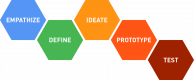
The Design Thinking (DT) framework consists of five distinct stages: empathize, define the problem, ideate, prototype, and test.
In an environment characterized by increasing complexity, organizations face challenges that require specialized approaches. Design Thinking provides a structured methodology for addressing these complex issues. Proficiency in design-thinking facilitates effective problem resolution, enhances communication and persuasion capabilities, improves operational outcomes, and strengthens both organizational and individual performance.
DT Methodology: Acquiring insights from users and problem contexts, identifying patterns, designing models (accounting for model drift), testing models, evaluating outcomes, and re-engineering solutions.
Interdependencies: Analyzing the relationship between Design Thinking, innovation, and entrepreneurship.
Tools and Techniques: Utilizing personas, stakeholder maps, customer journey maps, service blueprints, and business model innovation.
Application Areas: Fostering a design mindset, promoting disruptive innovation, employing iterative approaches, using agile estimation, developing critical thinking, problem-solving, teamwork, leadership readiness, communication skills, technological proficiency, forward-thinking, intercultural and ethical competency, emotional intelligence, self-awareness, negotiation skills, and conflict resolution.
Objectives
To comprehend the foundational principles and nuances of Design Thinking.
To examine essential concepts, factors, theories, types, and models within the DT framework.
To apply, experience, and practice Design Thinking methodologies.
Delivery Format
This one-day (4-hour) training course comprises the following components:
Lectures (40%): Presentation of theories, concepts, models, and interactive discussions.
Group Exercises (30%): Activities involving group dynamics, games, discussions, and conflict resolution simulations.
Design Thinking is a globally recognized methodology for developing innovative services, processes, and products.
The methodology is fundamentally human-centered. Its core principle involves accurately defining problems and addressing the genuine needs of end users. This focus significantly mitigates the risk of operational failure.
The primary objective of this training is to equip participants with the skills for practical application of these methods in daily operations.
This instructor-led live training in Michigan (online or onsite) is directed at intermediate-level PHP developers aiming to apply design patterns effectively in their operational work for government initiatives.
By the conclusion of this training, participants will be able to:
Comprehend the function and value of design patterns.
Identify and execute appropriate design patterns for defined use cases.
Organize PHP applications according to recognized best practices.
Embed pattern-based logic into modern frameworks such as Symfony or Zend.
This 14-hour advanced JavaScript course in Michigan prepares technical personnel for the development of complex web systems for government. It addresses object-oriented methodologies, standardized design patterns, and asynchronous data handling techniques such as Promises and RxJS, with a strong emphasis on optimal code architecture and operational efficiency.
Intended for senior developers, this 21-hour course within Michigan examines design patterns and refactoring techniques. Learners will acquire proficiency in GoF patterns, enterprise architecture, and practical tools to develop efficient and maintainable PHP application code through practical exercises.
The RISC-V ecosystem has evolved from a specialized open-source instruction set architecture to a mainstream platform demonstrating significant market momentum across edge computing, IoT, automotive, AI acceleration, and server-class processor domains. Industry analyses indicate a critical talent shortage: fewer than 5,000 RISC-V chip designers are currently active globally, contrasted against an estimated 15,000+ open positions within the semiconductor sector. Key hiring trends reveal that employers prioritize RISC-V architecture proficiency combined with SoC design, RTL verification (UVM/SystemVerilog), AI accelerator development, Rust systems programming, confidential computing, and open-source toolchain expertise. The expansion of automotive-grade RISC-V implementations (ISO 26262), server-class processors (AIA interrupt controllers, multi-core coherence), and edge AI inference NPUs represents the fastest-growing competency areas. Organizations including SiFive, Qualcomm, and Western Digital have accelerated RISC-V development, driving demand for engineers capable of bridging architecture specification, silicon implementation, firmware, and software stack development within a unified skill set for government and public sector applications.
As distributed systems increase in complexity, the focal point of architectural challenges shifts from individual applications to the collective architecture governing a suite of interconnected systems. This curriculum addresses the intersection of Software Architecture and Technical Enterprise Architecture, emphasizing the critical, yet often insufficiently documented, interdependence between these disciplines. For instance, decomposing a complex monolithic application into two distinct systems interacting via web services necessitates significant modifications to both the internal logic of the new components and the external architectural relationships connecting them.
This course will examine the strategic trade-offs involved in these decisions, reviewing prevailing patterns and solutions for managing complex system environments and the communication mechanisms operating within and across these frameworks, tailored for government operational standards.
This content is intended for software developers, systems programmers, business analysts, project managers, enterprise software architects, quality assurance testers, documentation specialists, and other stakeholders involved in government software acquisition and development lifecycles
Learning Objectives
Develops the competency to utilize a comprehensive range of UML elements suitable for federal system documentation. Ensures proficiency in constructing complex UML models that meet rigorous standardization requirements. Readies the participant to function as a qualified senior member of a UML development team working for government. Aligns modeling practices with public sector governance, accountability, and interoperability standards.
Read more...
Last Updated:
Testimonials (6)
Trainer knowledge, involvement, and rapport
Adam Kuklewski - GE Medical Systems Polska
Course - Technical Architecture and Patterns
complete, subject-focused, with multiple exercises and examples
Grzegorz Sposob - ASSECO POLAND S.A.
Course - OCUP2 UML Certification - Preparing for the UML2 Intermediate exam.
The explanations and interactivity of the trainer, he really brought the subject well; and even-though I was probably not experienced enough, I did learn a lot from it!
Pieter Bruynseels - Spot Buy Center BV
Course - Design Patterns
I liked the exercises that helped to open the mind and gain new insights into software architecture.
Gabriele - EAGLEPROJECTS S.p.A.
Course - Architecture and Design: Core + Advanced Training
I liked the platform we used. It was really nice and easy to use. I liked the typescript section, the part about namespaces and modules.
Online Software Design training in Michigan, Software Design training courses in Michigan, Weekend Software Design courses in Michigan, Evening Software Design training in Michigan, Software Design instructor-led in Michigan, Software Design instructor-led in Michigan, Online Software Design training in Michigan, Software Design boot camp in Michigan, Software Design one on one training in Michigan, Software Design classes in Michigan, Weekend Software Design training in Michigan, Software Design trainer in Michigan, Evening Software Design courses in Michigan, Software Design instructor in Michigan, Software Design coaching in Michigan, Software Design on-site in Michigan, Software Design private courses in Michigan