Online or onsite, instructor-led live Software Design training courses provide a thorough understanding of the fundamentals of Software Design through interactive discussion and hands-on practice.
Software Design training is available as "online live training" or "onsite live training." Online live training (also known as "remote live training") is conducted via an interactive remote desktop. Onsite live training can be delivered at customer premises in Virginia or in Govtra corporate training centers in Virginia.
Govtra -- Your Local Training Provider for government and public sector organizations.
VA, Stafford - Quantico Corporate
800 Corporate Drive, Suite 301, Stafford, united states, 22554
The venue is located between interstate 95 and the Jefferson Davis Highway, in the vicinity of the Courtyard by Mariott Stafford Quantico and the UMUC Quantico Cororate Center.

VA, Fredericksburg - Central Park Corporate Center
1320 Central Park Blvd., Suite 200, Fredericksburg, united states, 22401
The venue is located behind a complex of commercial buildings with the Bank of America just on the corner before the turn leading to the office.

VA, Richmond - Two Paragon Place
Two Paragon Place, 6802 Paragon Place Suite 410, Richmond, United States, 23230

The venue is located in bustling Richmond with Hampton Inn, Embassy Suites and Westin Hotel less than a mile away.
VA, Reston - Sunrise Valley
12020 Sunrise Valley Dr #100, Reston, United States, 20191

The venue is located just behind the NCRA and Reston Plaza Cafe building and just next door to the United Healthcare building.
VA, Reston - Reston Town Center I
11921 Freedom Dr #550, Reston, united states, 20190

The venue is located in the Reston Town Center, near Chico's and the Artinsights Gallery of Film and Contemporary Art.
VA, Richmond - Sun Trust Center Downtown
919 E Main St, Richmond , united states, 23219

The venue is located in the Sun Trust Center on the crossing of E Main Street and S to N 10th Street just opposite of 7 Eleven.
Richmond, VA – Regus at Two Paragon Place
6802 Paragon Place, Suite 410, Richmond, United States, 23230

The venue is located within the Two Paragon Place business campus off I‑295 and near Parham Road in North Richmond, offering convenient access by car with free on-site parking. Visitors arriving from Richmond International Airport (RIC), approximately 16 miles northwest, can expect a taxi or rideshare ride of around 20–25 minutes via I‑64 West and I‑295 North. Public transit is available via GRTC buses, with routes stopping along Parham Road and Quioccasin Road, just a short walk to the campus.
Virginia Beach, VA – Regus at Windwood Center
780 Lynnhaven Parkway, Suite 400, Virginia Beach, United States, 23452
The venue is situated within the Windwood Center along Lynnhaven Parkway, featuring modern concrete-and-glass architecture and ample on-site parking. Easily accessible by car via Interstate 264 and the Virginia Beach Expressway, the facility offers a hassle-free commute. From Norfolk International Airport (ORF), located about 12 miles northwest, a taxi or rideshare typically takes 20–25 minutes via VA‑168 South and Edenvale Road. For those using public transit, the HRT bus system includes stops at Lynnhaven Parkway and surrounding streets, providing convenient access by bus.
Design Thinking is a human-centered methodology for solving problems through empathy, definition, ideation, prototyping, and testing. This course places a strong emphasis on the Empathize stage, focusing on connecting previously identified pain points to the real needs of internal clients, and applying dynamic, collaborative activities to transform insights into actionable outcomes.
This instructor-led, live training (online or onsite) is aimed at beginner-level to intermediate-level teams and leaders who wish to deepen their empathy skills, strengthen relationships with internal clients, and translate pain points into meaningful opportunities for improvement. The training is designed to enhance the effectiveness of public sector workflows and governance practices.
By the end of this training, participants will be able to:
Apply empathy-based techniques to uncover and validate client needs.
Translate mapped pain points into clear, actionable needs.
Engage in dynamic role plays and simulations to practice client-centered conversations.
Collaboratively redefine problem statements from the client’s perspective.
Format of the Course for Government
Interactive lecture and guided discussions.
Dynamic, hands-on role plays and empathy exercises.
Group workshops for collaborative problem reframing.
Course Customization Options
To request a customized version tailored to a specific internal process (e.g., procurement or equipment provisioning), please contact us to arrange.
Design Thinking is a human-centered methodology for solving problems through empathy, definition, ideation, prototyping, and testing. By focusing on the first two stages — Empathize and Define — teams can better understand internal clients and accurately define the right problems to address.
This instructor-led, live training (online or onsite) is designed for beginner-level to intermediate-level teams and leaders who wish to strengthen their connection with internal clients, reduce resistance to change, and enhance operational efficiency through practical, collaborative methods for government.
By the end of this training, participants will be able to:
Utilize active listening and interviewing techniques to gather meaningful insights about internal clients.
Create empathy maps and document user needs and pain points.
Distinguish real root problems from perceived issues using tools like the 5 Whys and problem trees.
Formulate clear, actionable problem statements (POVs) that guide solution development.
Format of the Course
Interactive lecture and discussion.
Practical, hands-on exercises and role-plays.
Group workshops and plenary feedback sessions.
Course Customization Options
To request a customized version tailored to a specific internal process (e.g., procurement or equipment provisioning), please contact us to arrange.
This instructor-led, live training in Virginia (online or onsite) is designed for government professionals at the beginner to intermediate level who wish to understand and apply Design Thinking methodologies to drive innovation and improve business solutions for government.
By the end of this training, participants will be able to:
Comprehend the core principles of Design Thinking and its role in fostering innovation within public sector environments.
Apply the five phases of Design Thinking to address complex challenges and enhance service delivery.
Utilize ideation techniques and tools to stimulate creativity and generate innovative solutions.
Implement Design Thinking strategies to optimize processes and increase operational efficiency for government.
This instructor-led, live training in Virginia (online or onsite) is aimed at beginner-level to intermediate-level participants who wish to address everyday workplace challenges through gamification techniques for government.
By the end of this training, participants will be able to:
Comprehend the principles of Design Thinking and their application in problem-solving for government.
Incorporate gamification techniques to enhance engagement and innovation within public sector workflows.
Develop creative and practical solutions to common workplace issues in a government setting.
Collaborate effectively across teams to implement problem-solving strategies that align with public sector governance and accountability.
Apply iterative approaches to refine solutions through feedback and experimentation, ensuring continuous improvement for government operations.
Domain-Driven Design (DDD) is an approach to software development that emphasizes designing systems around the business domain, using a shared ubiquitous language and both tactical and strategic modeling techniques.
This instructor-led, live training (online or onsite) is aimed at advanced-level senior developers who wish to apply DDD principles to design robust, maintainable, and scalable systems for government.
By the end of this training, participants will be able to:
Identify and model core domain concepts using ubiquitous language and bounded contexts.
Apply tactical DDD patterns such as entities, value objects, aggregates, repositories, and domain services.
Design context maps and strategic boundaries to manage complexity across microservices and teams.
Integrate DDD practices into Agile teams and continuous integration/continuous deployment (CI/CD) workflows to enhance collaboration and delivery for government projects.
Format of the Course
Interactive lecture and discussion.
Extensive exercises and practice sessions.
Hands-on implementation in a live-lab environment.
Course Customization Options
To request a customized training for this course, please contact Govtra to arrange.
This instructor-led, live training in Virginia (online or onsite) is designed for intermediate-level developers, architects, and analysts who wish to learn and apply Domain-Driven Design (DDD) concepts and practices to their software projects for government.
By the end of this training, participants will be able to:
Understand core DDD concepts such as bounded contexts, entities, and their application in software development for government.
Apply strategic DDD to define and design the domain model, identify subdomains, and establish boundaries within public sector workflows.
Implement tactical DDD using patterns such as Command Query Responsibility Segregation (CQRS), factories, and event sourcing to enhance governance and accountability.
Refactor and modernize legacy systems effectively with DDD techniques to align with current government standards and practices.
Design and implement product, domain, and team-oriented architectures that support efficient public sector operations.
Utilize data mesh to create a domain-oriented data platform that supports data discovery, governance, and compliance for government.
This instructor-led, live training in Virginia (online or onsite) is aimed at beginner-level leaders and HR professionals who wish to learn and apply Design Thinking methodologies to foster innovation, enhance problem-solving capabilities, and engage teams effectively for government.
By the end of this training, participants will be able to:
Equip participants with tools and methodologies to foster innovation and team engagement in public sector environments.
Develop skills in empathy mapping, ideation, and prototyping for addressing complex challenges within government operations.
Apply Design Thinking principles to leadership and HR scenarios specific to the public sector.
Promote a culture of innovation within tech teams for government.
This instructor-led, live training in Virginia (online or onsite) is aimed at intermediate-level Java developers who wish to apply design patterns to enhance software structure, maintainability, and scalability for government projects.
By the end of this training, participants will be able to:
Understand the purpose and benefits of design patterns in a public sector context.
Effectively implement Creational, Structural, and Behavioral patterns in Java for government applications.
Improve code reusability, scalability, and maintainability to support robust government systems.
Refactor existing codebases using design patterns to align with best practices for government software development.
This instructor-led, live training in Virginia (online or onsite) is aimed at beginner to intermediate-level software and systems designers who wish to gain a structured and comprehensive understanding of Sparx Enterprise Architect for government use.
By the end of this training, participants will be able to:
Navigate and effectively utilize Sparx Enterprise Architect, mastering its interface and tools.
Model various business structures, including organization charts, processes, and systems, using a variety of diagrams.
Implement change tracking, version control, and team collaboration strategies within Sparx EA for government projects.
Leverage advanced features in Sparx EA, such as modeling with stereotypes, customization, and task automation, to enhance public sector workflows.
The evolution of microservices and containers in recent years has significantly transformed how we design, develop, deploy, and manage software. Modern applications must be optimized for scalability, elasticity, resilience, and adaptability. These new demands necessitate a different set of patterns and practices in modern architectures. In this training, we explore methods to identify, understand, and adjust to these evolving requirements.
Audience
This training is designed for individuals who have some familiarity with container technology and Kubernetes concepts but may lack practical experience. It is based on real-world use cases and lessons learned from actual projects, aiming to inspire participants to create and manage more effective cloud-native applications.
Developers
Operations Teams
DevOps Engineers
Quality Assurance (QA) Engineers
IT Project Managers
Format of the Course
Interactive lectures and discussions
Extensive exercises and practice sessions
Hands-on implementation in a live-lab environment
Course Customization Options
To request a customized training for government, please contact us to arrange.
This instructor-led, live training in Virginia (online or onsite) is designed for government web designers who wish to create applications using Adobe XD.
By the end of this training, participants will be able to:
Configure Adobe XD to begin designing an application.
Develop rapid wireframes.
Create prototypes that include micro interactions.
Incorporate UX designs into a professional portfolio for government use.
In this instructor-led, live training, participants will gain an understanding of both foundational and advanced concepts in software architecture and design through a series of hands-on exercises and discussions tailored specifically for government professionals.
Audience
Software professionals for government
Software designers for government
Developers for government
Format of the Course
Part lecture, part discussion, with a focus on practical exercises and extensive hands-on practice
Note
To request a customized training for government for this course, please contact us to arrange.
The core objective of the training and workshops is to equip participants with knowledge, tools, and techniques that enhance the effectiveness of activities focused on identifying business value based on client needs. These sessions emphasize achieving consensus among functions, technology, and quality in the process of creating requirements using brainstorming techniques.
Format of the Course
Interactive lectures and discussions.
Extensive exercises and practice sessions.
Hands-on implementation in a live-lab environment.
Course Customization Options for Government
To request a customized training program for government, please contact us to arrange.
Domain Driven Design (DDD) is an approach for managing complex behaviors in software development for government. This methodology ensures that technical solutions are aligned with the specific needs and workflows of public sector organizations, enhancing governance and accountability.
There are numerous established patterns widely available for government use. Sometimes it involves adapting these patterns by changing names or implementing them in specific technologies. This can save hundreds of hours that would otherwise be spent on design and testing. Training Goals: This course has two primary objectives: first, to enable participants to reuse well-known patterns; second, to facilitate the creation and reuse of patterns specific to their organization. It helps participants estimate how patterns can reduce costs, systematize the design process, and generate a code framework based on these patterns. Audience: The course is designed for software designers, business analysts, project managers, programmers, developers, operational managers, and software division managers within government agencies. Course Style: The course focuses on use cases and their relationship with specific patterns. Most examples are explained using UML and simple Java examples (the language can be adjusted if the course is booked as a closed session for government). It guides participants through the sources of these patterns and demonstrates how to catalog and describe them for reuse across the organization.
This instructor-led, live training in Virginia (online or onsite) is designed for government personnel who wish to learn how to conduct a successful design sprint within their organization.
By the end of this training, participants will be able to:
Mitigate the risk associated with launching a new product in the public sector.
Obtain valuable feedback from stakeholders on new concepts before the product is developed.
Foster creativity within teams to facilitate quicker and more informed decision-making.
In this instructor-led, live workshop training in Virginia (online or onsite), participants will learn how to apply the five stages of Design Thinking to better understand the challenges faced by end-users of a product or service, and then develop effective solutions to address these issues.
By the end of this training, participants will be able to:
Employ creative strategies to align customers' needs with technologically feasible solutions for government.
Develop a strategy to enhance customer value and improve product and service offerings.
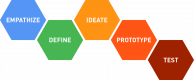
The Design Thinking (DT) process consists of five stages: empathize, define the problem, ideate, prototype, and test.
In an increasingly complex world, we encounter problems that require specialized approaches. Design Thinking is a valuable methodology for addressing these challenges. Mastering design thinking enhances the ability to tackle complex issues effectively, communicate more clearly, persuade stakeholders efficiently, improve business outcomes, and enhance both organizational and personal performance.
How DT works: Understand user needs and problems, identify patterns, develop a model (accounting for model drift), test the model, evaluate its effectiveness, and refine it as necessary.
The relationship between Design Thinking, innovation, and entrepreneurship.
DT methods and tools include persona development, stakeholder mapping, customer journey mapping, service blueprint creation, and business model innovation.
Applications of DT: Cultivating a design mindset, fostering disruptive innovation, adopting an iterative approach, utilizing agile estimation techniques, enhancing critical thinking and problem-solving skills, promoting teamwork and leadership readiness, improving communication abilities, becoming technologically savvy, thinking forward, developing intercultural and ethical competencies, building emotional intelligence, fostering self-awareness, honing negotiating skills, and resolving conflicts.
Objectives:
To understand the foundational principles and nuances of Design Thinking for government.
To explore key concepts, factors, theories, types, and models in Design Thinking.
To experiment with, experience, and practice Design Thinking methods.
Delivery:
This is a 1-day (4-hour) training course that includes:
Lectures (40%): Presentation of theories, concepts, models, and interactive discussions.
Group exercises (30%): Group dynamics, games, group discussions, and mock conflict resolution exercises.
Individual activities (15%): Writing, designing, and peer discussion.
Other components (15%): Video presentations and reading materials.
Note: Due to the nature of this course, there is a minimum group size requirement of 3 participants.
In an increasingly complex world, we encounter challenges that may require specialized approaches. Design Thinking is a method that helps address these complex issues effectively. By mastering design thinking, participants will enhance their ability to manage intricate problems, communicate more clearly, persuade stakeholders efficiently, improve business outcomes, and boost both organizational and personal performance for government.
Program Objectives:
Introduction to Design Thinking and its application across various sectors
Identification of the benefits of Design Thinking and its significance in developing solutions
Understanding the central role of the customer in the Design Thinking process
Familiarization with the tools used in Design Thinking and how to effectively apply them for government
The purpose of this training is to equip participants with the skills necessary to design advanced development and project structures in C#. During the course, students will become familiar with MSDN resources and tools that support the development process, such as Microsoft Visual Studio and ReSharper. This training is designed to enhance technical capabilities for government professionals, ensuring they are well-equipped to meet the complex demands of public sector workflows and governance.
This instructor-led, live training in Virginia (online or onsite) is aimed at intermediate-level PHP developers who wish to apply design patterns effectively in their projects for government.
By the end of this training, participants will be able to:
Understand the purpose and benefits of design patterns for government.
Identify and implement appropriate design patterns for common scenarios.
Structure PHP applications using industry-recognized best practices.
Integrate patterns into modern frameworks such as Symfony or Zend for government use.
A two-day course designed to cover all essential design principles, complemented by practical code examples and the latest advancements in industrial technology. This course is highly beneficial for government automotive software developers, enhancing their skills and alignment with public sector workflows and governance.
This instructor-led, live training (online or onsite) is aimed at C developers wishing to learn embedded C design principles for government applications.
By the end of this training, participants will be able to:
Understand the design considerations that make embedded C programs reliable for government use
Define the functionality of an embedded system in alignment with public sector workflows
Define the program logic and structure to obtain the desired result while ensuring governance and accountability
Design a reliable, error-free embedded application for government operations
Obtain optimal performance from target hardware in government environments
Format of the Course:
Interactive lecture and discussion focused on government needs
Exercises and practice tailored to public sector scenarios
Hands-on implementation in a live-lab environment for government professionals
Course Customization Options:
To request a customized training for this course, please contact Govtra to arrange.
This training is designed for JavaScript developers who are responsible for designing and implementing advanced Internet applications for government. The curriculum focuses on best practices in JavaScript programming, highlighting the most common mistakes to avoid. A key component of the training is an in-depth discussion of object-oriented programming using JavaScript syntax.
Kubernetes is an open-source platform designed for automating all development stages of containerized applications. Design patterns provide iterable solutions to common software development challenges relevant to software design. Kubernetes extensions are used to configure and support Kubernetes clusters. By leveraging Kubernetes design patterns and extensions, users can implement CI/CD practices while ensuring the scalability and flexibility of software applications.
This instructor-led, live training (online or onsite) is aimed at developers and DevOps engineers who wish to utilize Kubernetes design patterns and extensions to develop enterprise applications on Kubernetes clusters for government use.
By the end of this training, participants will be able to:
Set up a Kubernetes cluster and configure essential DevOps tools.
Understand the foundational principles of software design patterns and Kubernetes extensions.
Utilize Kubernetes extensions and design patterns when interacting with the Kubernetes API.
Create customized Kubernetes resources and implement dynamic controllers in a cluster.
Manage and secure any Kubernetes environment using Kubernetes plugins.
Integrate DevOps networking models into existing and new Kubernetes projects for government applications.
Format of the Course
Interactive lecture and discussion.
Extensive exercises and practice sessions.
Hands-on implementation in a live-lab environment.
Course Customization Options
To request a customized training for this course, please contact us to arrange.
Model-Based Development (MBD) is a software development methodology designed to enhance the efficiency and cost-effectiveness of developing dynamic systems such as control systems, signal processing, and communication systems. This approach emphasizes graphical modeling over traditional text-based programming.
In this instructor-led, live training, participants will learn how to apply MBD methodologies to reduce development costs and accelerate the time-to-market for their embedded software products, specifically tailored for government applications.
By the end of this training, participants will be able to:
Select and utilize appropriate tools for implementing MBD in their projects.
Leverage MBD to facilitate rapid development during the early stages of their embedded software projects.
Expedite the release of their embedded software into the market, ensuring alignment with public sector workflows and governance requirements.
Format of the Course
A combination of lectures, discussions, exercises, and extensive hands-on practice to ensure practical application of MBD principles for government projects.
Microservice architecture is a method for developing software applications as a collection of small, self-contained services, each operating in its own process and communicating through lightweight mechanisms such as HTTP resource APIs. These services can be deployed efficiently using continuous automation systems and eliminate the need for centralized management. Microservices can be developed in various programming languages and can integrate with different data storage systems.
This instructor-led, live training is designed for enterprise developers and architects within the public sector. It introduces microservice architecture from a .NET perspective, discusses migration strategies from monolithic systems, and guides participants through the creation and deployment of a sample microservice-based application tailored for government use.
By the end of this training, participants will be able to:
Understand when to employ and when to avoid microservice architecture
Create and implement a robust testing strategy for microservices
Deploy a sample microservice-based application into a production environment for government operations
Refactor a monolithic application into modular services suitable for government workflows
Audience
Developers
Architects
Format of the Course
Part lecture, part discussion, with exercises and extensive hands-on practice
To assist Technical Analysts and Designers in understanding how to navigate the software implementation process, ensuring traceability between business specifications and software code for government projects.
This two-day training course is designed to help technical analysts and designers translate specifications provided by business analysts into detailed technical requirements. After transforming these requirements into software component representations, the resulting system components will effectively trace system requirements back to their corresponding software structures.
Ultimately, these technical specifications are implemented in software code and tested at the component level. The resulting software components offer a high degree of responsiveness to changes, as they allow for layer-by-layer tracing from user interfaces to business objects, through the application components where actor usage choices are stored.
This course is designed for experienced programmers who wish to delve into the issues surrounding the use of design patterns and refactoring. Participants will gain a comprehensive understanding of the properties and practical applications of these patterns, enabling them to efficiently construct and maintain robust application code for government projects.
With the emergence of highly complex distributed systems, the complexity of a single system has shifted to the complexity of the architectural framework encompassing multiple systems. This course examines the relationship between Software Architecture and Technical Enterprise Architecture, two areas that are interrelated but currently not well documented. For instance, breaking down a complex monolithic system into two systems communicating via web services can trigger significant changes in both the new systems and the architecture connecting them.
This course will explore trade-offs, as well as common patterns and solutions for managing complex systems and communication within and between them, specifically tailored to enhance effectiveness and efficiency for government operations.
Developers, programmers, business analysts, project managers, software architects, testers, and individuals responsible for documentation or anyone involved in the software development process for government.
Objectives:
Prepares you to work with a broad range of UML elements Teaches you how to create complex UML models Prepares you to become a qualified senior member of a UML Development Team for government.
Audience: Developers, programmers, business analysts, project managers, software architects, testers, and individuals responsible for documentation or anyone involved in the software development process. Objectives: Prepares participants to work with a broad range of UML elements. Teaches the skills necessary to create complex UML models. Equips attendees to become qualified senior members of a UML Development Team, enhancing their capabilities for government projects.
I liked the exercises that helped to open the mind and gain new insights into software architecture.
Gabriele - EAGLEPROJECTS S.p.A.
Course - Architecture and Design: Core + Advanced Training
I liked trainer the most, surely the best i have yet had the pleasure to listen to. Has very big knowlage and experience, created good atmosphere during the training, i've never felt intimidated or scared to speak, had some really good discussions. i really like that we tried to base everything we talked about on our experiences, not only professional but also educational as well as personal experiences. I also liked the amount of methods presented and the fact that we tried to use every single one of them. I also liked that this training was remote, made it a lot easier for people who are worikg a day job to be able to be on time and be active.
Thanks for recommendation of the book! I will most definitely try it :).
Bartek Michalak - Politechnika Lodzka
Course - Design Thinking Fundamentals
The topics covered in the training and the trainer's knowledge about the topics.
Sajid Baloch - Eschbach GmbH
Course - Microservice Patterns: Migrating from a Monolithic to a Microservice Architecture with .Net
the examples the trainer used in each subject which made it easier to understand
huda Alyassi - Dubai Government Human Resources Dept.
Course - Adobe XD
Interaction and communication
Archie Dlamini - Vodacom SA
Course - JavaScript - Advanced Programming
Trainer was really kind and knowledgeable, going the extra mile to explain things that I didn't know
Felix - Microchip Technology Inc
Course - Embedded C Application Design Principles for Automotive Professionals
I like the simple but informative example codes.
Yue Wang - DBS Bank Ltd
Course - Design Patterns
Good exercises
Hui Yi Neo - Titansoft Pte Ltd
Course - Object Oriented Design using Design Patterns
I liked the practical exercises for each design pattern introduced.
Carlos Aragones - Roche Diagnostics
Course - Design Patterns in C#
I really enjoyed the real examples and exercises.
Dmitry Baranovsky
Course - Introduction to Domain Driven Design
I found the course structure to be very well thought out. While some of my colleagues failed to see Kristin's intentions I feel that the way he presented the material and managed to connect basic concepts with a much broader set of complex issues was spot on.
Alexander Pavlovsky
Course - Technical Architecture and Patterns
The interaction and enthusiasm he had about the training.
Online Software Design training in Virginia, Software Design training courses in Virginia, Weekend Software Design courses in Virginia, Evening Software Design training in Virginia, Software Design instructor-led in Virginia, Software Design instructor in Virginia, Evening Software Design courses in Virginia, Software Design coaching in Virginia, Software Design classes in Virginia, Online Software Design training in Virginia, Software Design boot camp in Virginia, Software Design trainer in Virginia, Software Design one on one training in Virginia, Software Design instructor-led in Virginia, Software Design on-site in Virginia, Software Design private courses in Virginia, Weekend Software Design training in Virginia