




Online or onsite, instructor-led live Agile training courses cover areas such as agile project management, agile development, agile testing, and the agile mindset.
Agile training is available as "online live training" or "onsite live training." Online live training (also known as "remote live training") is conducted through an interactive, remote desktop environment. Onsite live training can be conducted locally at customer premises in Georgia or in Govtra corporate training centers in Georgia.
Govtra -- Your Local Training Provider for government
Atlanta, GA – Regus at Colony Squar
1201 Peachtree Street NE, Suite 200, Atlanta, United States, 30361
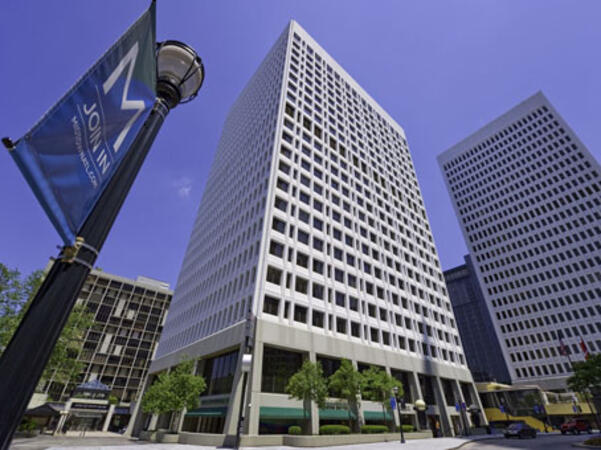
The venue is centrally located in Midtown Atlanta within the prominent Colony Square complex at 1201 Peachtree Street NE, easily accessed by car via I‑75/85 or GA‑400, with several parking garages nearby. From Hartsfield–Jackson Atlanta International Airport (ATL), around 15 miles south, a taxi or rideshare typically takes 20–30 minutes north along I‑75/85 N. Public transit users can take MARTA Rail to the Arts Center or Midtown stations (0.3–0.5 miles away) and walk easily, and numerous MARTA bus routes along Peachtree Street stop directly outside the entrance.

Atlanta, GA – The Proscenium
1170 Peachtree Street NE, Atlanta, United States, 30309
The venue is located in the heart of Midtown Atlanta in the Proscenium high–rise at 1170 Peachtree Street NE, easily accessible by car via I‑75/85 and GA‑400 with several parking garages nearby. Visitors arriving from Hartsfield–Jackson Atlanta International Airport (ATL), about 15 miles south, can expect a taxi or rideshare ride taking 20–30 minutes via I‑75/85 North. Public transit is seamless with MARTA Rail service; the Arts Center and Midtown stations are within walking distance (approximately 0.3–0.4 miles), and multiple MARTA bus routes also serve Peachtree Street.
Decatur, GA – Regus at One West Court Square
One West Court Square, Suite 750, Decatur, United States, 30030
The venue is located in the heart of downtown Decatur within One West Court Square, easily reached by car via I‑20 and I‑285, with several public parking decks directly adjacent. Travelers from Hartsfield–Jackson Atlanta International Airport (ATL), approximately 17 miles southwest, can expect a taxi or rideshare ride of around 25–30 minutes via I‑20 East. Public transit is particularly convenient: MARTA rail users can disembark at Decatur Station (about 0.15 miles away) and walk a few minutes to the building entrance. Local bus routes also serve Trinity Place and Swanton Way, putting the center within easy reach.
Atlanta, GA – Regus at One Hartsfield
100 Hartsfield Centre Parkway, Suite 500, Atlanta, United States, 30354
The venue is located in the One Hartsfield Center office building, adjacent to Hartsfield–Jackson Atlanta International Airport, easily reached by car via I‑75/I‑85 or GA‑138, with abundant on-site parking. Visitors arriving from ATL airport can walk or take a shuttle to the building, or opt for a quick 2–3‑minute taxi or rideshare ride. Public transit users can board MARTA from the Airport Station and ride one stop to College Park Station, then catch a connecting shuttle or enjoy a brief walk of about half a mile.
Atlanta, GA – Regus at Peachtree
260 Peachtree Street NW, Suite 2200, Atlanta, United States, 30303
The venue is situated in the iconic Coastal States Building at 260 Peachtree Street in downtown Atlanta, accessible by car via I‑75/85 or I‑20 with convenient parking garages nearby. From Hartsfield–Jackson Atlanta International Airport (ATL), about 12 miles south, a taxi or rideshare along I‑75/85 North takes approximately 15–20 minutes. For public transit, MARTA rail users can disembark at Five Points Station and walk 0.5 miles northeast, or exit at Peachtree Center Station and walk two blocks north—both routes offering easy access.
Augusta, GA – At Broad Street
823 Broad Street, Augusta, United States, 3090
The venue is located in the heart of downtown Augusta on Broad Street, easily accessible by car via I‑20 with several public parking garages nearby. From Augusta Regional Airport (AGS), about 9 miles west, taxis or rideshares typically take 15–20 minutes via I‑20. Public transit is available through Augusta Public Transit buses with routes along Broad Street, stopping within a few blocks of the venue, offering a convenient option for attendees without a car.
Savannah, GA – Regus at Bull Street
100 Bull St Downtown, Suite 200, Savannah, United States, 31401
The venue is located in the historic downtown area on Bull Street in the Altmayer Building, easily accessible by car via I‑16 and U.S. 17, with several public garages nearby. From Savannah/Hilton Head International Airport (SAV), about 12 miles west, taxis or rideshares typically take 15–20 minutes via U.S. 17 South. Public transit is available via Chatham Area Transit (CAT) buses, with frequent service along Bull and Broughton Streets; Johnson Square Station is just a couple minutes’ walk from the venue.
Lean is a methodology dedicated to maximizing value while minimizing waste in processes.
This instructor-led, live training (online or onsite) is designed for intermediate-level banking and process management professionals who wish to apply Lean and Agile tools to enhance efficiency in managing requirements, projects, and operational processes.
By the end of this training, participants will be able to:
Understand and apply Lean principles within the context of banking processes.
Utilize Lean tools to optimize requirements gathering and project execution.
Implement and manage Kanban boards for effective workflow management.
Identify and eliminate waste in banking and service-oriented processes.
Format of the Course
Interactive lectures and discussions.
Extensive exercises and practice sessions.
Hands-on application of Lean and Agile tools in case-based scenarios.
Course Customization Options for Government
To request a customized training program for government, please contact us to arrange.
This instructor-led, live training, available online or onsite, is designed for advanced-level Release Train Engineers (RTEs) who seek to enhance their understanding of their role and refine their skills.
By the end of this training, participants will be able to:
- Understand the responsibilities of a SAFe Release Train Engineer (RTE).
- Learn effective methods for facilitating Agile Release Trains (ARTs) and driving continuous delivery.
- Develop proficiency in planning and executing Program Increment (PI) events.
- Gain expertise in managing risks, dependencies, and impediments.
- Acquire techniques to promote relentless improvement and support Agile transformation within their teams and organizations for government.
This instructor-led, live training (conducted online or onsite) is designed for marketing executives who seek to understand how to leverage Agile frameworks to optimize growth marketing strategies, develop customer-centric products, and achieve scalable growth for government initiatives.
By the end of this training, participants will be able to:
- Understand the key frameworks utilized in agile product management.
- Analyze potential demand for new products and services.
- Learn techniques for pricing new products and adjusting value propositions.
This two-day course is designed for IT professionals interested in utilizing the Waterfall model and exploring traditional methods to address its limitations, including various Agile approaches. On the first day, participants will receive an overview of these methodologies to help them determine which approach may be most suitable for their specific environment. The second day focuses on project management techniques and best practices derived from Agile methodologies that can be effectively applied in both Waterfall and Agile contexts, enhancing efficiency and effectiveness for government projects.
Training provides participants with the knowledge, techniques, tools, and practices necessary for managing projects using Agile methodologies. The core of this training involves presenting selected Agile approaches, such as the Scrum Framework, Agile Project Management, Lean, Kanban, and others.
This training is designed for individuals interested in implementing Agile approaches within their organization, including those who are currently participating in projects or project managers who are either implementing or planning to implement Agile methodologies. The training includes a comprehensive theoretical section, hands-on workshops, and practical examples to ensure a well-rounded learning experience.
This program is tailored to enhance the capabilities of professionals for government and private sector settings, ensuring they are equipped with the skills needed to effectively manage projects using Agile principles.
This course is designed to equip professionals with the skills necessary for success in the role of a business analyst on Agile projects for government. Participants will learn effective collaboration techniques with team members, product owners, scrum masters, and customers to streamline the development process. The curriculum includes a simulated project where participants can practice common scenarios, ensuring they are well-prepared for real-world challenges.
The iSQI Agile Essentials course is an internationally recognized qualification designed for government professionals involved in agile projects who wish to become proficient in working within an agile environment. This includes Project Managers, Quality Managers, Software Development Managers, Business Analysts, Developers, Testers, IT Directors, and Management Consultants. The course consists of eight sections that guide participants through the lifecycle of an agile project, from release planning and writing user stories to iteration reviews (showcases) and retrospectives.
On the first day, 55% of the time is dedicated to theory, while 45% is allocated for exercises, focusing on key principles. The second day emphasizes practical application, with 40% of the time devoted to theory and 60% to exercises.
### Course Objectives
- Understand the principles behind the agile manifesto and its approach to software development.
- Recognize the roles within an agile team.
- Learn how to contribute as an agile team member in defining quantifiable requirements.
- Apply Whole Team quality methods to ensure that acceptance criteria are met.
- Appreciate the importance of effective iteration reviews and how to contribute to continuous improvement through retrospectives.
Agile Software Testing is a set of practices designed to provide timely and continuous feedback on software quality issues, adhering to the principles of agile development. Continuous Integration (CI) involves all developers on a team integrating their work multiple times a day to ensure seamless collaboration and maintain high standards for government projects.
This course offers an introductory overview of Agile software testing, focusing on essential test concepts within the context of Agile (Scrum) development methodologies. Utilizing Crispin and Gregory’s Agile Testing Quadrants model as a foundational framework, the course delves into modern principles and practices of Agile testing, tailored to enhance efficiency and effectiveness in project management for government and other sectors.
In this course, you will master the essential concepts, principles, and techniques of Agile Team Facilitation, which are critical for leading teams to higher levels of maturity. Effective team meetings and collaboration are fundamental to success in an Agile environment, and the role of the Agile Team Facilitator is pivotal in guiding teams toward self-organization. You will develop the facilitation mindset necessary to design and conduct collaborative meetings that drive teams towards improved results and greater maturity. This course serves as a stepping stone towards becoming an Agile Coach, emphasizing both skill development and mindset transformation. You will also learn group facilitation tools and techniques that enhance engagement and help achieve desired outcomes in meetings and workshops for government settings.
This two-day course offers an introductory overview of Agile software testing. It covers fundamental testing concepts within the context of Agile (Scrum) development methodologies, utilizing Crispin & Gregory’s Agile Testing Quadrants model as a framework to explore modern principles and practices in Agile testing.
### Intended Audience
This course is designed for development teams seeking to enhance their testing practices within an Agile environment. It is also appropriate for individuals aiming to pursue a career in testing and serves as a suitable prerequisite for the iSQI Certified Agile Tester course, aligning with the needs of professionals working in or supporting government agencies.
The training offers a comprehensive 360-degree perspective on the challenges and strategies involved in Agile implementation and leading change. It covers various aspects, from shaping organizational culture to transforming environments, teams, and mindsets. Participants will learn essential tools and techniques for working with different environments and teams, as well as gain insights into the role of an Agile Leader and the principles of Agile thinking.
This training is designed for individuals interested in implementing Agile methodologies within their organizations, including those involved in projects and project managers who are either currently implementing or planning to implement Agile approaches in their projects.
The training includes a content-rich segment, interactive workshops, and practical examples to ensure a well-rounded learning experience for government professionals.
In the course "Applying Metrics for Predictability," participants will gain the essential tools needed to answer critical questions with greater certainty. This training will cover the identification of key metrics necessary for accurate forecasting, the visualization of these metrics through appropriate analytics, and the application of these analytics to make reliable forecasts and assess risks. Additionally, attendees will learn how to implement meaningful interventions to enhance overall process improvement, ensuring alignment with public sector workflows and governance standards for government.
To assist Business Analysts in effectively modeling and validating their business processes and resources to enhance organizational agility based on their target architecture and evolving market demands for government.
This two-day training course is designed to help participants learn how to model their business processes and resources, enabling them to adapt these elements to changes in goals, strategies, and impacted capabilities as part of the target architecture. By focusing on key performance indicators such as strategies, tactics, KPIs, and business capabilities, delegates will develop a vision-centric approach to business process and resource mapping. Utilizing the appropriate BPMN and UML notation tailored to their specific language, participants will gain an understanding of how to adjust these models in response to changing strategies, tactics, and policies.
The objective of this course is to deepen participants' understanding of agile methodologies and digital practices within a governmental context. The curriculum will cover the foundational principles of digital and agile mindsets and behaviors, followed by an exploration of key agile methods, techniques, and tools, demonstrating their effective application. Additionally, the course will review the most recent guidance on agile practices in the public sector and highlight the primary digital standards for government. Delivery of the course content is facilitated through a combination of presentations, exercises, and interactive activities, and can be conducted either in person or remotely.
This training course is designed to assist product managers, product owners, business analysts, system architects, and developers in understanding how to effectively manage requirements from the initial product vision through guiding developers in accurate implementation.
Specifically, this course aims to help product managers better articulate the value propositions of their products based on strategic goals and stakeholder needs. Business analysts and product owners will learn to articulate the requirements for the product backlog, identify appropriate epics and user stories, and contribute to value creation. Through interactive case studies, participants will gain skills in detailing these requirements to ensure a clear understanding of needs and prepare system acceptance tests. Utilizing a common and productive UML profile, they will learn to structure requirements for efficient communication with architects and developers through an iterative requirement gathering process.
Audience:
Product Managers
Product Owners
Business Analysts
Anyone interested in the Requirements Management Process for government
This training equips participants with the knowledge, techniques, tools, and practices essential for managing IT projects. It covers methodologies such as Prince2, PMBook, Agile Project Management, Scrum, and MSF approaches for CMMI and RUP. The curriculum includes an overview of the philosophical underpinnings, organizational structures, roles, and practical methods for organizing project phases.
During the workshop, participants will have the opportunity to learn and practice selected tools and techniques in a hands-on environment. This training is specifically designed for individuals interested in implementing project management approaches within their organizations, as well as IT professionals involved in or planning to manage IT projects.
The training comprises a comprehensive theoretical component, interactive workshops, and practical examples, ensuring that participants are well-prepared to apply these methodologies effectively in real-world scenarios for government and other sectors.
This instructor-led, live training in Georgia covers the concepts, tools, and techniques needed to carry out continuous integration of your software projects in an Agile environment for government. Participants engage in a series of hands-on exercises throughout the course to apply their knowledge in real-world scenarios. Interaction between the instructor and participants is encouraged. Real-world cases are discussed, and specific issues and questions are addressed and resolved in class.
JIRA Software is a robust tool designed for project management, often leading users to focus more on its functionalities than on the methodologies it supports. This instructor-led, live training introduces participants to the capabilities of Jira and Confluence, demonstrating how these tools can work together to enhance team efficiency in delivering successful projects or products. Participants will learn how to effectively use these tools for managing user requirements, testing, communication, and centralizing information in one platform.
The training covers various aspects such as JIRA projects, Confluence spaces, workflows, boards (Kanban and Scrum), planning and dependencies, linkage between Jira and Confluence, reporting, important fields and custom fields, issue types, screens, and filtering.
By the end of this training, participants will be able to:
- Create a Scrum or Kanban project.
- Configure Jira to effectively manage the project.
- Manage issues with precision.
- Design screens tailored to handle specific issue types.
- Develop workflows and boards, understanding their interaction.
- Conduct both basic and advanced searches and analysis.
- Generate and review reports essential for team and management oversight.
This training is specifically designed to align with public sector workflows, governance, and accountability, ensuring that participants are well-equipped to utilize Jira and Confluence for government projects.
The PAQ course is a three-day experiential training program designed to prepare participants for practical exam scenarios, focusing on developing skills that can be directly applied in their professional roles.
The examination format involves a hands-on assessment where candidates are provided with a product backlog release, which includes user stories and associated design documentation. Additionally, the application will contain seeded defects. Candidates will receive clear instructions on the expectations for the practical assessment and will have the opportunity to create the necessary work products. Each practical assessment will include 1 or 2 scenario-based questions requiring written answers (up to 5 questions in total), covering a range of competencies. These written responses, along with the solutions to the product backlog release, will be evaluated by an independent assessor. The assessment duration is 2.5 hours.
This training program is specifically tailored to enhance the capabilities of professionals for government roles, ensuring alignment with public sector workflows and governance standards.
Training for government and organizational personnel enables participants to acquire knowledge, techniques, tools, and practices in project management. This training is grounded in internationally recognized standards and best practices, encompassing both Traditional Project Management and Agile methodologies. It is further enriched by the personal experience and practical business insights of the trainer. The curriculum incorporates elements from selected methodological approaches, including PRINCE2®, PMBoK® Guide, AgilePM®, and SCRUM®.
This training is tailored for individuals interested in implementing project management frameworks within their organizations, as well as those currently involved in projects and project managers seeking to enhance efficiency. The program includes theoretical instruction, hands-on workshops, and practical case studies.
Training in project management methodologies equips participants with the knowledge, techniques, tools, and practices essential for conducting projects using Traditional Project Management (PRINCE2) and Agile approaches, including Kanban and Scrum. The foundation of this training is built on well-established project management frameworks such as PRINCE2, Agile Project Management, Scrum, and Kanban.
This training is designed for individuals interested in implementing project management methodologies within their organization, those who are involved in projects, and project managers aiming to enhance the effectiveness of their project management practices. The curriculum includes theoretical instruction, practical workshops, and real-world examples.
As part of the training, participants are prepared for certification through a practice exam and have the opportunity to take the official examination. Successful completion of the exam at the end of the training leads to the awarding of the AgiPrince2 Agile Foundation international certification, which is recognized globally.
This comprehensive program aligns with best practices and standards for government, ensuring that participants are well-prepared to apply these methodologies in a public sector context, thereby promoting efficiency and accountability.
The Leading SAFe Agilist certification equips individuals to play a crucial role in their organization's success. This certification enables professionals to effectively execute and deliver value through Agile Release Trains, as well as to spearhead a Lean-Agile transformation. These skills are particularly valued across various industry sectors, including those for government, where agility and efficiency are paramount to meeting public sector goals and ensuring accountability.
Develop the expertise necessary to guide the continuous delivery of value within a Lean enterprise for government. Acquire the skills required to effectively fulfill the roles of SAFe Product Owner and Product Manager in the Agile Release Train (ART), as it delivers value through Program Increments. Understand how the Continuous Delivery Pipeline and DevOps culture contribute to the ongoing improvement of the ART.
Utilize Lean thinking to break down Epics into Features and Stories, refine these Features and Stories, manage both Program and Team backlogs, and plan and execute Iterations and Program Increments.
The "SAFe® Product Owner/Product Manager with POPM Certification" is a two-day course that enables participants to acquire the skills necessary for effective value delivery management in a Lean-based enterprise. Participants will learn about Agile Release Train (ART) principles, Program Increment planning, writing Epics, and how to effectively fulfill the roles of Product Owner and Product Manager. The course also covers topics related to Continuous Delivery Pipeline and DevOps culture, enabling participants to integrate effectively into processes and continuously improve ART.
This two-day course teaches the Lean-Agile principles and practices of the Scaled Agile Framework® (SAFe®) for government.
You will learn how to execute and release value through Agile Release Trains, build an Agile Portfolio, and lead a Lean-Agile transformation at enterprise scale. The curriculum is tailored to align with public sector workflows, governance, and accountability requirements.
This training will provide you with a comprehensive understanding of the Lean-Agile mindset and how to apply SAFe principles and practices to support Agile teams, programs, program portfolio management, and coordinate large Value Streams in a government context. Attending this class prepares you to take the exam and become a certified SAFe® Agilist (SA). Associated Certification: SAFe Agilist (SA)
This two-day course is designed to equip teams that are part of an Agile Release Train (ART) with the skills necessary to operate effectively in an Agile environment using Scrum, Kanban, and Extreme Programming (XP). Participants will learn how to function as Agile Teams, develop their backlogs, and plan and execute iterations. The training also covers understanding the ART, the team’s role within it, and the processes for planning, executing, and continuous improvement alongside other teams.
This course prepares teams to manage a Program Increment (PI), including all necessary meetings at both the Team and Program levels, with a particular emphasis on PI planning. By attending this class, participants will be well-prepared to take the exam and become certified SAFe® Practitioners (SP) for government.
Upon completion of this course, you should be able to:
- Apply SAFe principles to scale Lean and Agile development within your organization
- Understand your team’s role on the Agile Release Train
- Recognize other teams on the train, their roles, and the dependencies between them
- Plan iterations effectively
- Execute iterations, demonstrate value, and enhance your processes
- Plan Program Increments comprehensively
- Collaborate and integrate with other teams on the train
Read more...
Last Updated:
Testimonials (8)
The treiner approach was very good, and demostrated knowledge of the subject
Osvaldo Calombe - EMIS - Empresa Interbancaria de Servicos, S.A
Trainer is very knowledgeable on the subject and able to provide real world examples through his experience.
Nouf
Course - Agile Software Testing with Continuous Integration
sharing experiences and sharing other materials not included in the package.
BRYAN SANTOS - Mizuho Bank Ltd - Manila Branch
Course - Agile Business Analysis
I really enjoyed this training! As much interactive as it could be given current virtual set up. Very structured and clear way of sharing the knowledge! It definitely feels that the trainer has an extensive expertise in working in SAFE. I'd recommend this trainer a lot!
Joanna Kulpa - EY GLOBAL SERVICES (POLAND) SP Z O O
Course - SAFe® Product Owner/Product Manager with POPM Cerification
I liked very much the mood and the peace of the trainer.
Daniel Iliescu - Provident Polska S.A.
Course - Effective Agile Project Management with Jira & Confluence
All of it. Having had no previous exposure to Jenkins, I was a little concerned about my ability to keep up. IPad provided appropriate coaching/support, when I asked for help, so that I was able to follow the presentation at a level I was happy with.
Graham Congdon
Course - Jenkins: Continuous integration for Agile development
Online Agile training in Georgia, Agile training courses in Georgia, Weekend Agile courses in Georgia, Evening Agile training in Georgia, Agile instructor-led in Georgia, Agile instructor-led in Georgia, Weekend Agile training in Georgia, Agile one on one training in Georgia, Agile classes in Georgia, Online Agile training in Georgia, Agile instructor in Georgia, Agile on-site in Georgia, Agile boot camp in Georgia, Agile coaching in Georgia, Agile private courses in Georgia, Agile trainer in Georgia, Evening Agile courses in Georgia